Equality, Wealth, and Power and the Need for Civil Government in Adam Smith, Part 1
November 4, 2025
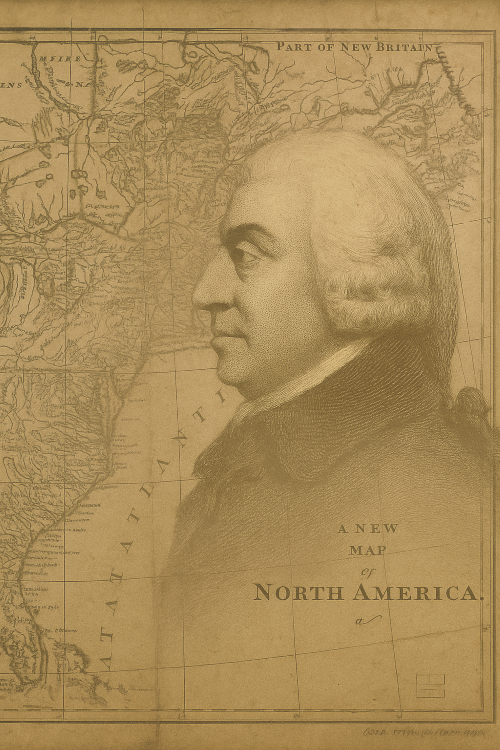
How can political equality last in a world of economic inequality? Adam Smith's answer rests on analytical egalitarianism, where institutional design ensures competition, justice, and broad participation in governance. Jimena Hurtado explains in this two-part series.
How can political equality last in a world of economic inequality? Adam Smith's answer rests on analytical egalitarianism, where institutional design ensures competition, justice, and broad participation in governance. Jimena Hurtado explains in this two-part series.
Jean-Jacques Rousseau famously observed that power and wealth threaten social stability:
"In respect of equality, we should understand by this term, not that the degrees of power and wealth should be absolutely identical, but that, as regards power, it should be kept within bounds, and exercised only in virtue of rank and laws; and, as regards wealth, that no citizen should be rich enough to buy another, and none so poor as to be forced to sell himself." (Rousseau, 1964[1762], 213-214).
Much has been written about the opposition between Rousseau and Adam Smith. In his 1756 letter to the Edinburgh Review, Smith dismisses Rousseau’s Second Discourse as an embellished version of Bernard Mandeville’s second volume of The Fable of the Bees or Private Vices, Publick Benefits, (Smith 1980 [1756]: 250). In The Theory of Moral Sentiments (TMS) Smith rejected Mandeville’s system as licentious (TMS VII.ii.4), arguing that it dangerously imposed upon people (TMS VII.ii.4.6-7) and perpetuated the harmful policies of the Commercial System. Mandeville’s system, following Smith, would support the influence of a certain special interest group on government.
Yet, despite their differences, Smith and Rousseau shared concerns regarding the intersection of wealth, power, and governance. Both recognized that economic inequality shapes political inequality, necessitating civil government. This concern aligns with themes found in The Federalist Papers and the 1813 letter Thomas Jefferson sent John Adams on aristocracy. Smith, as a defender of both republicanism and commercial society, offers a nuanced path from natural equality to economic inequality and the subsequent need for civil government.
Smith argues that while societies can function through the "mercenary exchange of good offices according to an agreed valuation" (TMS II.ii.3.2), such arrangements require justice (TMS II.ii.3.3). Justice, in turn, depends on government institutions where the executive and judiciary are separate, and the legislative power is accountable to its constituency.
The colonies provide Smith with an occasion to show how equality and freedom, under the right institutions, lead to prosperity. However, it is necessary to clarify Smith’s notion of natural equality. Samuel Fleischacker (2013) provides a summary of literature on equality in Smith that shows the different interpretations of Smith as favorable to government redistribution policies and his fundamentally egalitarian stance throughout his oeuvre. This fundamental egalitarianism is what I associate with analytical egalitarianism as a starting point to analyze and evaluate social and political institutions. Smith’s “commitment to human equality” (Fleischacker 2013, p. 487) might be seen in some of the policies he proposes or suggests and is even clearer in the consequences he derives from economic inequality but cannot be strictly equated with material egalitarianism. Equality before the law and a hint towards equality of opportunities and outcomes are consequences of this foundational analytical egalitarianism in Smith.
Following Sandra J. Peart and David M. Levy (2008), I adopt analytical egalitarianism as the foundation of Smith’s political theory. This framework emphasizes that all individuals are capable of decision-making within a system of incentives that, if properly structured, fosters a stable and prosperous social order. As Barry R. Weingast (2022, 2023) discusses, the system of natural liberty is much more complex than a minimal government where each individual simply follows their self-interest. In An Inquiry into the Nature and Causes of the Wealth of Nations (WN), Smith discusses the possible threat that inequality of wealth poses for political order and how it requires special attention (WN V.i.b.2); the government must deal with the problem of envy that arises from the tension between inequality as an incentive for production and consumption and inequality as a source of unchecked power for special interest groups.
Dennis C. Rasmussen (2016) elaborates on Smith’s view of inequality as a “double-edged sword” that, on the one hand, “encourages productivity and helps to maintain the ‘distinction of ranks’ thereby bolstering political stability”, and, on the other, leads us to “admire and emulate the very rich and to neglect and even scorn the poor, which in turn serves to undermine both morality and happiness” (Rasmussen 2016, p. 342). Considering both sides of inequality implies realizing, for one, the importance of civil government, and, for the other, how different levels or degrees of inequality have different consequences on social order and political stability.
Smith’s comparison of European colonies in America illustrates how human, economic, and political elements interact to yield different outcomes. Among these outcomes, an appropriate level of economic inequality that does not threaten political equality occupies a central place. His generally positive assessment of the British colonies, despite his condemnation of slavery (WN III.ii), underscores how institutional configurations shape economic and social stability that can effectively deal with the tension between inequality of wealth and prosperity.
Yet, despite their differences, Smith and Rousseau shared concerns regarding the intersection of wealth, power, and governance. Both recognized that economic inequality shapes political inequality, necessitating civil government. This concern aligns with themes found in The Federalist Papers and the 1813 letter Thomas Jefferson sent John Adams on aristocracy. Smith, as a defender of both republicanism and commercial society, offers a nuanced path from natural equality to economic inequality and the subsequent need for civil government.
Smith argues that while societies can function through the "mercenary exchange of good offices according to an agreed valuation" (TMS II.ii.3.2), such arrangements require justice (TMS II.ii.3.3). Justice, in turn, depends on government institutions where the executive and judiciary are separate, and the legislative power is accountable to its constituency.
The colonies provide Smith with an occasion to show how equality and freedom, under the right institutions, lead to prosperity. However, it is necessary to clarify Smith’s notion of natural equality. Samuel Fleischacker (2013) provides a summary of literature on equality in Smith that shows the different interpretations of Smith as favorable to government redistribution policies and his fundamentally egalitarian stance throughout his oeuvre. This fundamental egalitarianism is what I associate with analytical egalitarianism as a starting point to analyze and evaluate social and political institutions. Smith’s “commitment to human equality” (Fleischacker 2013, p. 487) might be seen in some of the policies he proposes or suggests and is even clearer in the consequences he derives from economic inequality but cannot be strictly equated with material egalitarianism. Equality before the law and a hint towards equality of opportunities and outcomes are consequences of this foundational analytical egalitarianism in Smith.
Following Sandra J. Peart and David M. Levy (2008), I adopt analytical egalitarianism as the foundation of Smith’s political theory. This framework emphasizes that all individuals are capable of decision-making within a system of incentives that, if properly structured, fosters a stable and prosperous social order. As Barry R. Weingast (2022, 2023) discusses, the system of natural liberty is much more complex than a minimal government where each individual simply follows their self-interest. In An Inquiry into the Nature and Causes of the Wealth of Nations (WN), Smith discusses the possible threat that inequality of wealth poses for political order and how it requires special attention (WN V.i.b.2); the government must deal with the problem of envy that arises from the tension between inequality as an incentive for production and consumption and inequality as a source of unchecked power for special interest groups.
Dennis C. Rasmussen (2016) elaborates on Smith’s view of inequality as a “double-edged sword” that, on the one hand, “encourages productivity and helps to maintain the ‘distinction of ranks’ thereby bolstering political stability”, and, on the other, leads us to “admire and emulate the very rich and to neglect and even scorn the poor, which in turn serves to undermine both morality and happiness” (Rasmussen 2016, p. 342). Considering both sides of inequality implies realizing, for one, the importance of civil government, and, for the other, how different levels or degrees of inequality have different consequences on social order and political stability.
Smith’s comparison of European colonies in America illustrates how human, economic, and political elements interact to yield different outcomes. Among these outcomes, an appropriate level of economic inequality that does not threaten political equality occupies a central place. His generally positive assessment of the British colonies, despite his condemnation of slavery (WN III.ii), underscores how institutional configurations shape economic and social stability that can effectively deal with the tension between inequality of wealth and prosperity.
From Equality to Inequality
Smith begins his account of economic development with the division of labor, which enhances productivity by allowing individuals to specialize in tasks (WN I.i.1). Specialization leads to commercial exchange, transforming society into "what is properly a commercial society" (WN I.iv.1). This process, however, raises questions about the origins of inequality.
At first glance, one might assume that Smith attributes inequality to natural differences in talent. However, he quickly dispels this notion. In the following paragraph, Smith states that this natural difference of talents “is, in reality, much less than we are aware of” (WN I.ii.4).
His famous comparison between the philosopher and the street porter illustrates that differences in ability emerge from custom and education. Smith advances that the difference in talents “is not upon many occasions so much the cause, as the effect of the division of labour” (WN I.ii.4). Custom and education promote the difference in talents among human beings (WN II.ii.5) and lead these differences to be complimentary and useful to each other. Thus, while the division of labor generates economic prosperity, it simultaneously reinforces inequalities that were negligible before the division of labor.
Smith is not stating that people are naturally equal but rather that for analytical purposes this natural inequality is negligible. Equality can be supposed as a first step in the analysis of commercial society, and of any other form of social organization.
This analytical egalitarianism has profound implications for institutional design. The challenge is to prevent economic inequality from undermining political equality. Smith’s critique of what he called the Commercial or Mercantile System highlights how policies favoring one class—particularly merchants—violate this principle. He warns that empowering a particular social or economic group risks distorting legislative priorities.
It is well-known that Smith wrote WN to oppose and denounce the negative effects of the policies promoted by the authors he identified as belonging to the Commercial System. These policies implemented a system of incentives that opposed the natural progress of opulence counteracting “the natural inclinations of man” (WN III.i.3).
Those natural inclinations or principles of the human mind are common to all. Sympathy, the propensity to truck, barter, and exchange, the principle to persuade, the desire to better one’s condition and to be loved, the love to domineer, or the taste of beauty are all tendencies or inclinations that every human being possesses. The commonality of such principles make the case for analytical equality. They all interact, within a specific structure of incentives, to produce different results in terms of social order and economic growth.
These same shared principles also explain our social interactions and how they lead to individual identities, characters, and tastes. Human beings not only differ in what they do to participate in commercial exchanges they also differ in what they seek in those exchanges.
One of the main problems with the Commercial System is that it privileges the interests of one class over that of others. With its policies, it violates analytical egalitarianism and builds an economic and political structure where the voice of the merchants has more power than any other. Smith reiterates the risk of empowering one social, political, or economic group over any other and advocates for measures that may, at least, promote the well-being and participation of the majority.
However, the majority is not necessarily the same as a political majority. Most people are consumers and live by their wages. This is the majority Smith is writing about when he considers that improving the living conditions of the workers and attending to the interest of consumers benefits society as a whole.
Just as in the colonies, where labor is relatively scarce (WN IV.vii.b.2), the liberal reward of labor, according to Smith, is the sign of a growing economy (WN I.viii.27). Therefore, high wages not only encourage productivity (WN I.viii.44) but they also “counteract the disposition of the masters to combine together in order to oppress the labourers.” (WN IV.vii.b.3). High wages also increases the laborer's “comfortable hope of bettering his condition, and of ending his days perhaps in ease and plenty, animates him to exert that strength to the utmost.” (WN, I.viii.44). The conclusion is that:
At first glance, one might assume that Smith attributes inequality to natural differences in talent. However, he quickly dispels this notion. In the following paragraph, Smith states that this natural difference of talents “is, in reality, much less than we are aware of” (WN I.ii.4).
His famous comparison between the philosopher and the street porter illustrates that differences in ability emerge from custom and education. Smith advances that the difference in talents “is not upon many occasions so much the cause, as the effect of the division of labour” (WN I.ii.4). Custom and education promote the difference in talents among human beings (WN II.ii.5) and lead these differences to be complimentary and useful to each other. Thus, while the division of labor generates economic prosperity, it simultaneously reinforces inequalities that were negligible before the division of labor.
Smith is not stating that people are naturally equal but rather that for analytical purposes this natural inequality is negligible. Equality can be supposed as a first step in the analysis of commercial society, and of any other form of social organization.
This analytical egalitarianism has profound implications for institutional design. The challenge is to prevent economic inequality from undermining political equality. Smith’s critique of what he called the Commercial or Mercantile System highlights how policies favoring one class—particularly merchants—violate this principle. He warns that empowering a particular social or economic group risks distorting legislative priorities.
It is well-known that Smith wrote WN to oppose and denounce the negative effects of the policies promoted by the authors he identified as belonging to the Commercial System. These policies implemented a system of incentives that opposed the natural progress of opulence counteracting “the natural inclinations of man” (WN III.i.3).
Those natural inclinations or principles of the human mind are common to all. Sympathy, the propensity to truck, barter, and exchange, the principle to persuade, the desire to better one’s condition and to be loved, the love to domineer, or the taste of beauty are all tendencies or inclinations that every human being possesses. The commonality of such principles make the case for analytical equality. They all interact, within a specific structure of incentives, to produce different results in terms of social order and economic growth.
These same shared principles also explain our social interactions and how they lead to individual identities, characters, and tastes. Human beings not only differ in what they do to participate in commercial exchanges they also differ in what they seek in those exchanges.
One of the main problems with the Commercial System is that it privileges the interests of one class over that of others. With its policies, it violates analytical egalitarianism and builds an economic and political structure where the voice of the merchants has more power than any other. Smith reiterates the risk of empowering one social, political, or economic group over any other and advocates for measures that may, at least, promote the well-being and participation of the majority.
However, the majority is not necessarily the same as a political majority. Most people are consumers and live by their wages. This is the majority Smith is writing about when he considers that improving the living conditions of the workers and attending to the interest of consumers benefits society as a whole.
Just as in the colonies, where labor is relatively scarce (WN IV.vii.b.2), the liberal reward of labor, according to Smith, is the sign of a growing economy (WN I.viii.27). Therefore, high wages not only encourage productivity (WN I.viii.44) but they also “counteract the disposition of the masters to combine together in order to oppress the labourers.” (WN IV.vii.b.3). High wages also increases the laborer's “comfortable hope of bettering his condition, and of ending his days perhaps in ease and plenty, animates him to exert that strength to the utmost.” (WN, I.viii.44). The conclusion is that:
Is this improvement in the circumstances of the lower ranks of the people to be regarded as an advantage or as an inconveniency to society? The answer seems at first sight abundantly plain. Servants, labourers and workmen of different kinds, make up the far greater part of every great political society. But what improves the circumstances of the greater part can never be regarded as an inconveniency to the whole. (WN, I.viii.36).
The greater part of the population ought to be considered when evaluating policies and incentives. The same applies when considering the interest of consumers:
Consumption is the sole end and purpose of all production; and the interest of the producer ought to be attended to, only so far as it may be necessary for promoting that of the consumer. The maxim is so perfectly self-evident, that it would be absurd to attempt to prove it.
(WN, IV.viii.49).
Since most people are workers and consumers, institutional arrangements and incentives should prioritize these shared characteristics. While work and consumption differ based on specialization, the division of labor, and individual tastes, these variations should not dictate policy decisions. Firstly, they are too numerous and specific to be accounted for in policy without overreaching into individual decision-making. Secondly, there is value in treating each individual as equal to others.
This maxim in legislation, is not self-evident, as faction and violence illustrate. Conflicting interests are inherent to social life, and the desire or temptation to impose specific social, political, or economic interests is always present. The love to domineer and the difficulty of guaranteeing contracts that preserve the balance of interests are constant challenges.
This issue is particularly significant when considering how the division of labor leads to inequality in wealth, and how this inequality, in turn, can translate into political power.
This maxim in legislation, is not self-evident, as faction and violence illustrate. Conflicting interests are inherent to social life, and the desire or temptation to impose specific social, political, or economic interests is always present. The love to domineer and the difficulty of guaranteeing contracts that preserve the balance of interests are constant challenges.
This issue is particularly significant when considering how the division of labor leads to inequality in wealth, and how this inequality, in turn, can translate into political power.
Sources of Subordination, Civil Government and the Administration of Justice
According to Smith (WN V.i.b.5-7), there are four sources of superiority in the absence of civil government: personal traits and virtues, age, fortune, and birth. The first corresponds to “superiority of personal qualifications, of strength, beauty, and agility of body; of wisdom, and virtue, of prudence, justice, fortitude and moderation of mind” (WN V.i.b.5). However, since these traits are disputable, not “plain and palpable”, no legal rules of subordination can be established upon them (WN V.i.b.5). Age appears to have been the primary source of authority and subordination in pre-commercial societies (WN V.i.b.6). Fortune became the main source of authority in societies that allowed for “any considerable inequality of fortune” as those dependent upon the wealthy for their subsistence and security would “obey his orders in war, and submit to his jurisdiction in peace.” (WN V.i.b.7). Finally, birth presupposes “an ancient superiority of fortune,” which explains the authority of long-established wealthy families (WN V.i.b.8).
Nevertheless, this superiority of birth and fortune, following Smith, tends to disappear in “an opulent and civilized society,” where transactions are mediated through exchange. In a commercial society, where everyone depends on exchange for subsistence, the superiority of fortune is contested, even if it exists and constitutes the “great complaint” of society (WN V.i.b.7). Even if birth and fortune are the most common causes of subordination (WN V.i.b.11), in further stages of society, they might not be all that stable.
That is why inequality in wealth leads to civil government. Significant property accumulation necessitates governance to protect the wealthy from the resentment and potential violence of the poor.
Nevertheless, this superiority of birth and fortune, following Smith, tends to disappear in “an opulent and civilized society,” where transactions are mediated through exchange. In a commercial society, where everyone depends on exchange for subsistence, the superiority of fortune is contested, even if it exists and constitutes the “great complaint” of society (WN V.i.b.7). Even if birth and fortune are the most common causes of subordination (WN V.i.b.11), in further stages of society, they might not be all that stable.
That is why inequality in wealth leads to civil government. Significant property accumulation necessitates governance to protect the wealthy from the resentment and potential violence of the poor.
The acquisition of valuable and extensive property, therefore, necessarily requires the establishment of civil government. Where there is no property, or at least none that exceeds the value or two or three days labour, civil government is not necessary. (WN V.i.b.2).
The rich need to secure their possessions (WN V.i.b.11):
Civil government, so far as it is instituted for the security of property, is in reality instituted for the defence of the rich against the poor, or of those who have some property against those who have none at all.
(WN V.i.b.12).
These passages make clear that civil government is necessary to secure possessions and can also serve as a tool of oppression for the poor. In periods of slow economic growth, stagnation, or minimal social mobility, civil government might only protect the interests of the rich. This contradicts Smith’s vision of favoring the majority, that is laborers and consumers. Such a government would abandon analytical egalitarianism and prioritize the interests of a select few.
With the division of labor and rising productivity, wealth disparities increase. Even though economic growth reduces absolute inequality and improves overall living conditions (WN I.i.11), relative inequality might intensify, potentially threatening social stability.
As Wolf (2024) discusses, inequality posed a problem for Adam Smith. “The Problem of the Rich”, according to Wolf (2024) is twofold: wealth negatively affects moral sentiments, and it can translate into political power, allowing private interests to prevail over the general interest. The link between economic and political power enables the wealthy to command not just labor but lives. The asymmetry of sympathy, that is, our tendency to sympathize more readily with the wealthy than with the poor and miserable, fosters the corruption of moral sentiments (TMS I.iii.3).
Even if it is true, Smith notes, that humankind has a disposition to “go along with all the passions of the rich and powerful” that gives rise to “the distinction of ranks and the order of society” (TMS I.iii.2.3), pointing to the utility of inequality for social order, this inequality cannot be excessive. It would be difficult to determine exactly what the appropriate level of inequality is, but as in all of Smith’s analyses, it should not be so much as to make people invisible to each other nor so little as to disincentivize emulation. People have a tolerance for inequality that if exceeded can lead to jealousy and violence but that does not mean that full material equality is desirable.
In Federalist 10, Madison explicitly states that “the most common and durable source of factions has been the various and unequal distribution of property”. Like Smith, Madison connects the need for government to inequality, which gives rise to conflicting interests: “The regulation of these various and interfering interests forms the principal task of modern legislation, and involves the spirit of party and faction in the necessary and ordinary operations of the government” (Federalist 10).
As Brianne Wolf (2024) notes, the American founders faced two concerns regarding inequality: first, the possibility of an aristocracy supposedly based on talent, and second, the risk of the wealthy dominating government. Smith’s theory of civil government as a protector of the rich underscores the latter concern.
One crucial element remains for a complete picture of civil government: the administration of justice.
With the division of labor and rising productivity, wealth disparities increase. Even though economic growth reduces absolute inequality and improves overall living conditions (WN I.i.11), relative inequality might intensify, potentially threatening social stability.
As Wolf (2024) discusses, inequality posed a problem for Adam Smith. “The Problem of the Rich”, according to Wolf (2024) is twofold: wealth negatively affects moral sentiments, and it can translate into political power, allowing private interests to prevail over the general interest. The link between economic and political power enables the wealthy to command not just labor but lives. The asymmetry of sympathy, that is, our tendency to sympathize more readily with the wealthy than with the poor and miserable, fosters the corruption of moral sentiments (TMS I.iii.3).
Even if it is true, Smith notes, that humankind has a disposition to “go along with all the passions of the rich and powerful” that gives rise to “the distinction of ranks and the order of society” (TMS I.iii.2.3), pointing to the utility of inequality for social order, this inequality cannot be excessive. It would be difficult to determine exactly what the appropriate level of inequality is, but as in all of Smith’s analyses, it should not be so much as to make people invisible to each other nor so little as to disincentivize emulation. People have a tolerance for inequality that if exceeded can lead to jealousy and violence but that does not mean that full material equality is desirable.
In Federalist 10, Madison explicitly states that “the most common and durable source of factions has been the various and unequal distribution of property”. Like Smith, Madison connects the need for government to inequality, which gives rise to conflicting interests: “The regulation of these various and interfering interests forms the principal task of modern legislation, and involves the spirit of party and faction in the necessary and ordinary operations of the government” (Federalist 10).
As Brianne Wolf (2024) notes, the American founders faced two concerns regarding inequality: first, the possibility of an aristocracy supposedly based on talent, and second, the risk of the wealthy dominating government. Smith’s theory of civil government as a protector of the rich underscores the latter concern.
One crucial element remains for a complete picture of civil government: the administration of justice.
“Mere justice is, upon most occasions, but a negative virtue, and only hinders us from hurting our neighbour” (TMS II.ii.1.9). But without this negative virtue, “a man would enter an assembly of men as he enters a den of lions” (TMS II.ii.3.4) because the violation of justice can dissolve society (TMS II.ii.3.4).
This is why “[j]ustice […] is the main pillar that upholds the whole edifice. If it is removed, the great, the immense fabric of human society [...] must in a moment crumble to atoms.” (TMS, II.ii.3.3). Thus, the primary role of government is to uphold justice (WN, V.i.b.1).
Civil government must guarantee property rights through an efficient administration of justice that protects all from external and internal violence. The tolerable administration of justice is of crucial importance to control the consequences of economic inequality on the necessary equality before the law. It might also imply the most delicate and difficult government task of guaranteeing some equality of outcome that could be thought of as a social security network for the working poor.
Smith outlines three key functions of the sovereign under the system of natural liberty: ensuring security, and protection, administering justice, and managing certain public works and institutions that are not profitable for private individuals or groups. Among these public works and institutions Smith includes public education, which he considers crucial for mitigating the adverse effects of the division of labor.
But for a government to effectively perform these functions it must be respected and legitimate. According to Smith, legitimacy relies on the principles of utility and authority.
This is why “[j]ustice […] is the main pillar that upholds the whole edifice. If it is removed, the great, the immense fabric of human society [...] must in a moment crumble to atoms.” (TMS, II.ii.3.3). Thus, the primary role of government is to uphold justice (WN, V.i.b.1).
Civil government must guarantee property rights through an efficient administration of justice that protects all from external and internal violence. The tolerable administration of justice is of crucial importance to control the consequences of economic inequality on the necessary equality before the law. It might also imply the most delicate and difficult government task of guaranteeing some equality of outcome that could be thought of as a social security network for the working poor.
Smith outlines three key functions of the sovereign under the system of natural liberty: ensuring security, and protection, administering justice, and managing certain public works and institutions that are not profitable for private individuals or groups. Among these public works and institutions Smith includes public education, which he considers crucial for mitigating the adverse effects of the division of labor.
But for a government to effectively perform these functions it must be respected and legitimate. According to Smith, legitimacy relies on the principles of utility and authority.
The Principles of Utility and Authority
In Smith’s Lectures on Jurisprudence, we find that government is “founded on the principles of utility and authority” (LJ(B) 93). Both are present in every government to some extent (LJ(A) v.121). Whereas the former is more prevalent in democracies, the latter is to be found more frequently in monarchies (LJ(B) 93). The principle of authority compels individuals to obey their superiors without questioning the source of their authority (LJ(A) vi.1). The principle of utility, on the other hand, explains obedience as the result of people’s interest in preserving the advantages that a government provides (LJ(A) vi.1).
The principle of authority builds upon people’s natural “disposition to respect an established authority and superiority in the others, whatever they be” (LJ(A) v.120). Meanwhile, the principle of utility arises from people’s shared understanding of the government’s role in ensuring their security and independence (LJ(A) v.120).
The stability and legitimacy of the government depend on people adhering to these principles, which is by no means automatic. Moreover, as society advances and commercial society develops, enabling more enlightened citizens, the principle of utility takes precedence over the principle of authority.
“Everyone is sensible of the necessity of this principle to preserve justice and peace in society” (LJ(B) 13-14). Even the poor find it to their advantage to obey as they can, in most cases, “get redress of injuries from the wealthiest and most powerful” (LJ(B) 14).
This underscores the importance of the effective administration of justice for the stability of government. People only rebel when those in power act in ways that make the government unbearable (TMS I.iii.2.3).
Find the second part of this two-part series here.
The principle of authority builds upon people’s natural “disposition to respect an established authority and superiority in the others, whatever they be” (LJ(A) v.120). Meanwhile, the principle of utility arises from people’s shared understanding of the government’s role in ensuring their security and independence (LJ(A) v.120).
The stability and legitimacy of the government depend on people adhering to these principles, which is by no means automatic. Moreover, as society advances and commercial society develops, enabling more enlightened citizens, the principle of utility takes precedence over the principle of authority.
“Everyone is sensible of the necessity of this principle to preserve justice and peace in society” (LJ(B) 13-14). Even the poor find it to their advantage to obey as they can, in most cases, “get redress of injuries from the wealthiest and most powerful” (LJ(B) 14).
This underscores the importance of the effective administration of justice for the stability of government. People only rebel when those in power act in ways that make the government unbearable (TMS I.iii.2.3).
Find the second part of this two-part series here.
Author's note: I thank the participants of the Liberty Fund Conference “Adam Smith and the American Founding” for their comments and suggestions. My special thanks to Michael C. Munger and Amy Willis for putting together the virtual conference, to Janet Bufton for directing the conversation, and to Stella Remi-Bello for making everything work smoothly.
References
Fleischacker, S. (2013). “Adam Smith on Equality”, in Ch. Berry, M.P. Paganelli & C. Smith (eds.) The Oxford Handbook of Adam Smith, Oxford University Press, 485-500.
Jefferson, T. (1813). Letter from Thomas Jefferson to John Adams, October 28, 1813. In P. B. Kurland & R. Lerner (Eds.), The Founders' Constitution (Vol. 1, Ch. 15, Doc. 32). University of Chicago Press. Retrieved from https://press-pubs.uchicago.edu/founders/documents/v1ch15s32.html
Madison, J. (1787). Federalist No. 10. The Avalon Project, Yale Law School. Retrieved from https://avalon.law.yale.edu/18th_century/fed10.asp
Peart, S. J., & Levy, D. M. (Eds.). (2008). “Introduction: The Street Porter and the Philosopher Contextualized”. In The Street Porter and the Philosopher: Conversations on Analytical Egalitarianism, 1–12. University of Michigan Press. http://www.jstor.org/stable/10.3998/mpub.212207.4
Rasmussen, D. (2016). “Adam Smith on What Is Wrong with Economic Inequality”, American Political Science Review, 110(2), 342-352.
Smith, Adam. (1982 [1756]) “Letter to the Authors of the Edinburgh Review” in, Smith, Adam. Essays on Philosophical Subjects. Edited by W. P. D. Wightman and J. C. Bryce. Vol. III of The Glasgow Edition of the Works and Correspondence of Adam Smith. Indianapolis: Liberty Fund, 242-257.
Weingast, B.R. (2022). “Adam Smith’s Constitutional Theory”. Available at Adam Smith’s Project | Barry R. Weingast https://drive.google.com/file/d/1PPYwAVfirvNnq0H42G3Ao8wqRXZ2cFmY/view
Weingast, B. R. (2023). “Liberty and the neoclassical fallacy”. Journal of Public Finance and Public Choice, 38(2), 150-174.
Wolf, B. (2024). “Adam Smith, The American Founding and the Political Problem of Wealth”, Parts one and two. Available at Adam Smith Works / 1776 and the American Founding https://www.adamsmithworks.org/documents/the-american-founding-and-the-political-problem-of-wealth https://www.adamsmithworks.org/documents/the-american-founding-and-the-political-problem-of-wealth-2