Equality, Wealth, and Power and the Need for Civil Government in Adam Smith, Part 2
November 11, 2025
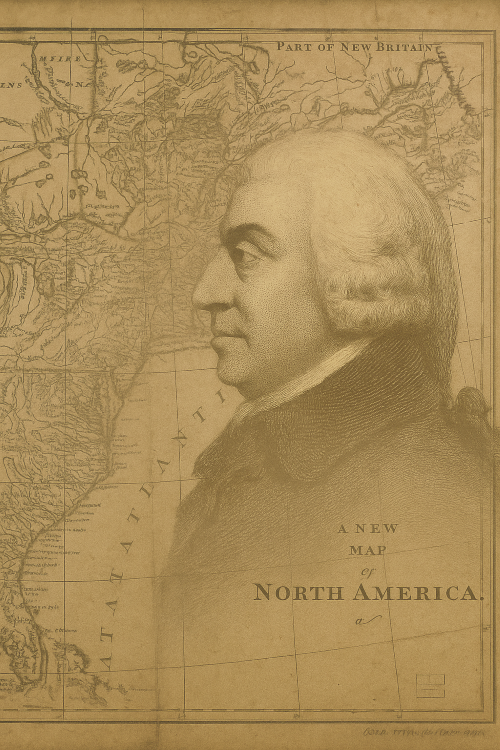
The Republic and the Role of Colonies
The colonies are a historical fact that Adam Smith examines through a comparative lens to understand the effects of certain economic policies and institutional structures. From Greece and Rome to the European colonies in America, colonization was initially seen as a means to acquire power and wealth for the colonizing country.
An Inquiry into the Nature and Causes of the Wealth of Nations (WN) was published just months before the Declaration of Independence of the British colonies in North America. The war for independence lasted until 1784, seven years before the beginning of the Haitian revolution, which led to Haiti becoming the first independent country in Latin America and the Caribbean in 1804. Smith’s comparative analysis of different colonies during this period aims to identify broad patterns and common traits that might explain institutional success or failure.
Smith is not concerned with justifying colonization; rather, he analyzes what it reveals about government architecture in specific contexts. In the case of European colonies in the Americas, he acknowledges a rationale for their establishment but critiques their foundations:
Folly and injustice seem to have been the principles which presided over and directed the first project of establishing those colonies; the folly of hunting after gold and silver mines, and the injustice of coveting the possession of a country whose harmless natives, far from having ever injured the people of Europe, had received the first adventurers with every mark of kindness and hospitality” (WN IV.vii.b.59).
Despite their unjust foundation, one that led to the subjugation and extermination of native populations, Smith acknowledges that some colonies, especially the British ones, had become thriving economies by his time. While this prosperity did not extend to indigenous or enslaved people, the British colonies provided an example of a successful republic.
Several factors contributed to this success:
The territories had abundant free land and relatively few inhabitants (WN IV.vii.b.1).
The settlers carried with them advanced knowledge, particularly regarding governance, administration, and the habit of subordination.
The geographical distance from the mother country allowed for greater autonomy.
High wages and low land prices facilitated the economic enrichment of laborers (WN IV.vii.b.2).
Smith concludes that Europe contributed to the colonies’ “present grandeur” primarily by sending the individuals who settled there (WN IV.vii.b.64). His use of the Latin phrase Magna virgin Mater! highlights the irony that, while European policies did not directly shape the colonies’ economic success, they did produce the people who built that success (WN IV.vii.b.64).
Among the most significant advantages of these colonies was the combination of abundant land and scarce labor, which drove wages upward. As Smith notes, rising wages signal economic growth and provide wage laborers with better material and political conditions. Furthermore, because landowners were often the same people who cultivated the land, there were no rent-seeking landlords, and wealth was distributed between profits and wages (WN IV.vii.b.3). The increased demand for labor did not diminish profits (WN I.viii.16); instead, economic expansion led to greater demand for goods, and higher wages incentivized productivity.
Even though these colonies did not enjoy complete freedom in foreign trade, their institutional autonomy compensated for this limitation. The relative freedom granted to British colonies, enhanced by the geographical challenges of centralized control and by the absence of precious metals, which led to their neglect, allowed them to thrive (WN IV.vii.b.7). “Plenty of good land, and liberty to manage their own affairs their own way, seem to be the two great causes of the prosperity of all new colonies” (WN IV.vii.b.16).
The colonists enacted laws that encouraged economic growth: a relatively active land market (WN IV.vii.b.18-19), low taxes (WN IV.vii.b.20), not having to contribute to the security and defense of England (WN IV.vii.b.20), a more extensive market even with severe controls on foreign trade (WN IV.vii.b.21-26), and a growing internal market (WN IV.vii.b.39). Moreover, they established an assembly of the representatives of the people with the exclusive capacity of imposing taxes (WN IV.vii.b.51). Smith notes that this assembly was more powerful than the executive branch, which had no means to corrupt them, ensuring that they remained accountable to their constituents (WN IV.vii.b.51).
This combination of political and economic regulations led Smith to advance that:
There is more equality, therefore, among the English colonists than among the inhabitants of the mother country. Their manners are more republican, and their governments, those of three of the provinces of New England in particular, have hitherto been more republican too.
(WN IV.vii.b.51).
Thus, economic and political institutions both supported and depended upon the colonies’ prosperity, ensuring that the risks of extreme inequality were controlled. Building the newly independent government on these foundations, Smith suggests, would yield the greatest benefits.
James Madison, like Smith, recognized the advantages of abundant land and a relatively sparse population. In Federalist 10, he argues that large republics are less susceptible to factions because their size and diversity made it harder for factions to consolidate power. Smith, too, valued diversity of interests, though he believed competition, rather than mere geographic dispersion, was key to balancing them (WN V.i.g.8).
For Smith, competition, rooted in an efficient administration of justice and the equal consideration of all citizens and their interests, was essential to the benefits of a government based on natural liberty. The British Colonies, in his view, only lacked full freedom in foreign trade.
Smith and the American Founders on Government Architecture
In his 1813 letter to John Adams, Thomas Jefferson raised the question of government architecture and the need to cultivate a natural aristocracy while refraining from fostering artificial aristocracy as part of the government. According to Jefferson, a natural aristocracy would be based on talents and virtue, whereas artificial aristocracy is based on fortune and birth. Smith would agree with Jefferson on the inconvenience of having an aristocratic body in government, as it would ultimately introduce inequality into legislation. However, this agreement might have some nuances.
As we have seen regarding the sources of subordination, Smith acknowledges that differences in talent and virtue exists but would hardly call them natural. In a commercial society, where the division of labor has already separated people, differences in talents and virtues cannot be attributed only to individual traits or merit. Instead, the majority of these differences arise from social, political, and economic circumstances, making them an unsuitable basis for legislation.
For Smith, inequality resulting from fortune and birth amounts to the same thing. Children born into wealthy families, especially those with long traditions of wealth, hold a superior position in society through no merit of their own. In this, Smith and Jefferson agree. Birth does not guarantee any of the talents and virtues desirable for those in positions of political power.
The cultivation of talents and virtue, as Jefferson suggests, should be one of the government’s goals. And Smith would concur. Smith’s perspective implies that this cultivation should not be limited to the most talented individuals but should extend to all. Therefore, merit depends not only on individual traits but also on the incentives and environment where it is nurtured. Jefferson’s bill for general instruction shows they share their concern for a widespread educational project that would spread learning as widely as possible.
Addressing the negative effects of the division of labor as part of his discussion of the duties of the sovereign, Smith includes public education (WN V.i.f.50-61). While the division of labor increases labor productivity, it also diminishes the cognitive and civil capacities of workers. “The inferior ranks of people […] in a civilized society” suffer from ignorance and stupidity and are unable to enter into enriching social interactions or exercise responsible citizenship. Smith advances that “to prevent that sort of mental mutilation, deformity and wretchedness […] would still deserve the most serious attention of the government” (WN V.i.f.60) and “the instruction of the inferior ranks of people […] deserve its attention” (WN V.i.f.61). Therefore, everyone, starting with the most vulnerable, should have access to basic public education. In this sense, rather than cultivating a natural aristocracy as Jefferson proposed, Smith advocates for eliminating a source of inequality stemming from disparities in birth and fortune.
Concluding Remarks
Against the risks of inequality, competition emerges as a potential solution. However, competition requires appropriate institutional arrangements to function effectively. Barry R. Weingast (2022) identifies four conditions necessary for the system of natural liberty to work: secure property rights, a mechanism for enforcing contracts, absence of government predation, and security.
According to Smith, the British Colonies in America met these conditions. Implementing them in the newly independent government would ensure its success. Introducing an aristocracy, by contrast, would risk upsetting the balance of interests and undermining analytical equality as a condition for legitimate and effective legislation.
Smith’s analysis centers on a crucial issue: how to maintain political equality in a world of economic inequality. His vision rests on analytical egalitarianism, where institutional design ensures competition, justice, and broad participation in governance. While commerce fosters interdependence and prosperity, unchecked wealth concentration threatens social stability. Thus, Smith’s Republicanism is not merely commercial but deeply concerned with institutional safeguards against economic domination. The first and most important of these safeguards is equality before the law. No one and no group should be powerful enough to influence or capture the state. No particular or special interest should be able to legislate in its own favor or against the majority made of mostly silent consumers who earn their living by the wages of their labor.
Author's note: I thank the participants of the Liberty Fund Conference “Adam Smith and the American Founding” for their comments and suggestions. My special thanks to Michael C. Munger and Amy Willis for putting together the virtual conference, to Janet Bufton for directing the conversation, and to Stella Remi-Bello for making everything work smoothly.
References
Fleischacker, S. (2013). “Adam Smith on Equality”, in Ch. Berry, M.P. Paganelli & C. Smith (eds.) The Oxford Handbook of Adam Smith, Oxford University Press, 485-500.
Jefferson, T. (1813). Letter from Thomas Jefferson to John Adams, October 28, 1813. In P. B. Kurland & R. Lerner (Eds.), The Founders' Constitution (Vol. 1, Ch. 15, Doc. 32). University of Chicago Press. Retrieved from https://press-pubs.uchicago.edu/founders/documents/v1ch15s32.html
Madison, J. (1787). Federalist No. 10. The Avalon Project, Yale Law School. Retrieved from https://avalon.law.yale.edu/18th_century/fed10.asp
Peart, S. J., & Levy, D. M. (Eds.). (2008). “Introduction: The Street Porter and the Philosopher Contextualized”. In The Street Porter and the Philosopher: Conversations on Analytical Egalitarianism, 1–12. University of Michigan Press. http://www.jstor.org/stable/10.3998/mpub.212207.4
Rasmussen, D. (2016). “Adam Smith on What Is Wrong with Economic Inequality”, American Political Science Review, 110(2), 342-352.
Smith, Adam. (1982 [1756]) “Letter to the Authors of the Edinburgh Review” in, Smith, Adam. Essays on Philosophical Subjects. Edited by W. P. D. Wightman and J. C. Bryce. Vol. III of The Glasgow Edition of the Works and Correspondence of Adam Smith. Indianapolis: Liberty Fund, 242-257.
Weingast, B.R. (2022). “Adam Smith’s Constitutional Theory”. Available at Adam Smith’s Project | Barry R. Weingast https://drive.google.com/file/d/1PPYwAVfirvNnq0H42G3Ao8wqRXZ2cFmY/view
Weingast, B. R. (2023). “Liberty and the neoclassical fallacy”. Journal of Public Finance and Public Choice, 38(2), 150-174.
Wolf, B. (2024). “Adam Smith, The American Founding and the Political Problem of Wealth”, Parts one and two. Available at Adam Smith Works / 1776 and the American Founding https://www.adamsmithworks.org/documents/the-american-founding-and-the-political-problem-of-wealth https://www.adamsmithworks.org/documents/the-american-founding-and-the-political-problem-of-wealth-2