Empowering the Next Generation: Economics Olympiad & Common Sense Economics
This week, Juliette Sellgren sits down with Martina Bacik, the 21-year-old founder of the Economics Olympiad that has grown to 120,000 students in 35+ countries, and Tawni Hunt Ferrarini, co-author of Common Sense Economics. Together they explore why teaching economics early matters, how competitions and books ignite curiosity, and what inspiring young people can teach us about building a hopeful, prosperous future.
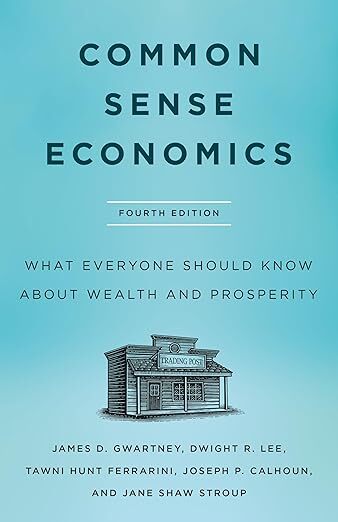
At 21, Martina Bacíková founded the Economics Olympiad, which has since grown from 4,300 students in the Czech Republic to over 120,000 participants from 5,000 schools across more than 30 countries, with finals hosted in historic Olympia, Greece. Alongside her is Tawni Hunt Ferrarini, one of the authors of Common Sense Economics: What Everyone Should Know About Wealth and Prosperity, who has dedicated her career to making economics accessible and practical for students everywhere.
This week, they sit down with The Great Antidote’s Juliette Sellgren to discuss:
This week, they sit down with The Great Antidote’s Juliette Sellgren to discuss:
· Why high school is the critical age to start teaching economics
· How competitions like the Economics Olympiad inspire learning and leadership
· The global reach of Common Sense Economics in classrooms and translations worldwide
· What they’ve learned from working with young people—and why optimism is alive in the next generation
This episode is for anyone who believes education can empower, entrepreneurship can inspire, and economics can be a tool for hope.
Want to explore more?
- Robert Lawson on Educating for Economic Freedom: James Gwartney's Legacy, a Great Antidote podcast.
- Donal Boudreaux, How Should Economics 101 Be Taught? at Econlib.
- Tawni Ferrarini, Teaching College Students About Money and Cryptocurrency, at Econlib.
- Russell Sobel, How We Failed Our Economics Students and Caused Low Government Approval Ratings, at Econlib.
- Tawni Hunt Ferrarini on Teaching About Hayek, a Great Antidote podcast.
Read the transcript.
Juliette Sellgren
Science is the great antidote to the poison of enthusiasm and superstition. Hi, I'm Juliet Sellgren, and this is my podcast, the Great Antidote- named for Adam Smith, brought to you by Liberty Fund. To learn more, visit www.AdamSmithWorks.org. Welcome back. Today on August 27th, 2025. I'm excited to host two people that might seem like unlikely guests who pair together, but I'm really excited and I think it makes a ton of sense, so I hope that you enjoy as well. Dear Guests, today we're going to be talking about Common Sense Economics and the Economics Olympiad two kind of different but kind of related important interventions in a sense, but also not in the education of young people in economics, something that we all think is super important. And to do that, I'm bringing on Martina Batik, who is the CEO and founder of the Economics Olympiad. She started it when she was just 21, so we'll get into how that happened and what it even is and why it's so important.
And Tawni Ferrarini, who is one of the authors of Common Sense Economics and who has come on the podcast multiple times before, I'm excited to bring them both together today because their insights are going to help me and us understand why economics education is so important, how we do it, and how it's actually impacting young people right now as we speak. So welcome to the podcast. Thank you. My first question for the both of you before we get fully into the topic is, what is the most important thing that young people should know that we don't?
Tawni Ferrarini
Martina, I'm going to let you start because I'm just so inspired by what you're doing.
Martina Bacik (2:03)
I think the most underestimated one, it's I think obvious when you get older and it's the people you go to school with, the people you surround yourself with when you are young, it's very impactful because they really, some of them stay with you, some of they don't. But the networks you create as a young person and the people you surround yourself with are the future leaders. The future contacts, the future people you will have around as friends. And it's so important, I think, to get yourself networked with the people you actually like and whom you grow together. So find people you like and who can get you places if you're just in the career path.
Tawni Ferrarini (2:47)
And from the Common Sense perspective, a group of authors inspired primarily by Jim Gwartney, who just so happened to be blind, wanted to impart knowledge and give it to who thought that economics was inaccessible and maybe too compact with jargon. And so hence the title Common Sense Economics: What Everyone Should Know About Wealth and Prosperity because each individual has the power to bringing themselves to a new space. They can make themselves better off, but they also have the ability to bring a lot of other people along with them. And I think that's at the heart and soul of a lot of young people right now is that they want to make a difference. And so we impart the knowledge through common sense economics, give them skills that they would otherwise not have or they want to hone. But then we do things partner with organizations like Economics Olympiad so that you can put the boots on the ground and you can make a difference through a competition that ignites even more excitement about the topic and the power of economic thinking.
Juliette Sellgren (3:55)
So you're leading us right into it. You guys know each other through the Economics Olympiad, which Martina you started. Before we get into your story of how that came to be, can you tell us about what it is, the reach, both of your current involvement with it? I know that there was just the final round was held in Athens and that there was a surprisingly young, I think for someone my age, I feel like it was a crazy age to win the gold medal at, but also maybe not surprising given what we believe about the power of economics and the power of education. So can you bring us into the fold on that?
Martina Bacik (4:42)
Yeah, so yeah, we did have the international final round in Greece. It's even better than US I would say, because it was in ancient Olympia, which is the birthplace of the ancient Olympic Games. So we have our indoor retreat center, like few hundred meters from the old ancient Olympic stadium, the monuments and everything. So this place is magical, I would even say, because it really draws students and everyone into the Olympic spirit and competing and being at the same time fair and being a teammate and really this history of the place I think has a lot to do with how people feel at the event and at the same time, so the students they are every year, they're mind blowing stories. And we never had anyone this young, when the International comics Olympiad the winner was in 10th grade, which is when he came on the stage, I was like, wow, he looks even looked like he's 12. So it's like among all these 19 years old, 18 years old, it was just like everyone was like, wow. So I think a lot of the students for next years, they have a lot to be afraid of from this guy because he was really, yeah, he will be probably participating for the next years to come for many, many years. So everyone should be worried.
Tawni Ferrarini (6:12)
And then just to kind of play off of that is he's a rising 10th grader and so potentially he could be in the Economics Olympiad three more times. So watch out everyone. But I also find that very inspiring because what we can do as a group and with this program and through different books and competitions is we empower these young people to move outside of the confines of the classroom and they can be self-motivated to bring this knowledge into their lives so that they can actually make more strategic decisions both in their monetary lives, but most importantly in the non-monetary aspects of their life, which is just incredible.
Juliette Sellgren (6:55)
So what does the actual competition look like? So this was the final round, but how does it go from its beginning, you enter into this competition to there's a finalist, and what des each round look like? What type of questions are they answering and problems are they grappling with? What does it look like to be a participant? A competitor?
Martina Bacik (7:24)
Yes. So in each country we do have a national organizer that knows their educational system, but it's really standardized, but they adjusted to the language and in the further rounds even to the kind of cultural economic topics that are there in a specific country. But it starts in the beginning, it starts in school rounds. We did have this year a record of 120,000 participants in the competition from over 5,000 schools worldwide. So these students, they participated all of them in the school round at their school, supervised by the teacher, filled multiple choice tests where we actually try to put and put really interesting questions referencing pop culture for the fans of Star Wars, I can drop one which you already took out from the test years ago, which is Obi wan Kenobi, the Jedi. They want to split Leia and Luke to the other parts of galaxies for the empire not to find them and kill them.
Well, how would an economist called this Obi wan Kenobi action? And the answer is differentiation of risk. But the thing is we wanted students who never were in touch in economics. We really want 'em to get excited and interested and ask more questions. So after the test finishes at schools, the students, they talk to their teacher, they talk between each other about like, oh, what was this? What did you fill in there? Oh, what was the answer to that question? And they started talk economics basically. So that's kind of our goal into school rounds. The best ones from the school rounds go to the region rounds. Some countries they don't have them because the period is either too small or the country is too small. And then there is national round, which is the national top five from all the country, the best ones. They come to this venue and compete for top tens all around. So there's a committee that they would be in front of. And out of these 50 finalists, top five go to the international final round, which we just had. So there were top five students from 29 countries.
Juliette Sellgren (9:43)
And I want to hear both of your kind of reflections on this because you were both there, but it's going to be different because Tawni, this is the first time you went, whereas Martina, you've been here since the beginning because it is your project. So what was it like? What was the energy like? What was it like to see students who had been working for this for a while now kind of showing off their skills and really honing in the economic common sense state of mind?
Martina Bacik
You were a committee member, so you got them firsthand. So I would be very curious.
Tawni Ferrarini (10:22)
Yeah, it was just the energy level was unbelievable. And the students, I'm an economics professor, so it's unusual to have so many students excited about macro, micro, international economics, and practical personal finance. And here they were working with us, they'd approach us for some help, all of the people, the experts there, but they were leaning in and helping each other across countries. And they had these common spaces where the students from places that defined the different countries by some war, but yet all of that was set aside and it became this immersion of different cultures, this exchange of different morals. It was just everybody was concentrating on economics, but so much more was taking place. And that I found extremely exciting. And then this is a part of Martina's life and the organizers who helped put this together, they expected this. I did not expect the enthusiasm or the excitement or the commitment to not only helping themselves, but helping each other prepare for the essay. There's a short essay part, there's multiple choice, and then the top 10 go on to the orals and it was magical, Martina.
Martina Bacik (11:51)
So I see it through the lenses of the young founder occasionally still. So I'm just oscillating on the event. I was oscillating with being completely baffled with what we created as a team and very humbled. And I'm like, what? I couldn't grasp it. And then the other part of me was business as usual. So I was sweating with between two of these mindsets of like, wow, this is incredible how possibility to create something so big. And then the second part, business as usual, that's what we do. Just this is a student, there's no tests. So yeah, it was interesting for me personally because as Tawni said, the atmosphere there was remarkable. The students were super talented and working very hard to prepare. At the same time, the national organizers from the countries we are in, they were so excited for the project and it just made me so happy to see everyone.
Juliette Sellgren (12:54)
Yeah. What's astonishing about this to me and what I think really I want to take a moment to think about is the scope of this. It is huge. So if you don't mind, Martina and Tawni, if you know these just telling us some stats about, so you told us a little bit about how many students are reached, but how many countries do people come and watch? How has it grown over the past couple of years and how's it going?
Martina Bacik (13:29)
Yeah, so I can start with the overview at if you want to add something, I would be very excited. So I started the Economics Olympiad in the Czech Republic in 2016, and we had 4,000 students, 4,300 students, which was from 103 schools, which is way more than I expected. So we literally opened the registrations and we had to close them in two weeks because we were just expecting 50 schools maximum. We were ready for 30 and we already got 100. So we stopped the registrations after two weeks and we ended up having 103 schools.
And then I thought, okay, that's much more interest than I thought. So Slovakia reached out and they want the Economics Olympiad there as well, and they wanted to do it the same year. So I told them to wait for the next year because I don't even know whether this is a good idea. And they reached out even before we had a proper website, we didn't have any website. It was just a Facebook page and the website was under construction, not even, it was very early. So the next year we went to Slovakia. The next year we went to Hungary, and the year after that we went to three more countries, Greece, Bosnia, China, and Poland joined just for the international because they already had an economic, and then it got most advanced kind of fast, I would say. So exponential really, because then as he came, which is Economic Fundamentals Initiative, that translates the Common Sense Economics book to native languages in most recent for Asia.
And they came with their partners who already translated the books and who were interested in organizing the economics in their country. So that year we grew 11 countries a year. So from seven countries we grew to 18. And it was really hard, honestly, we were all for it. But this year was, it was really fast growth, which we handled, but it has some pains. And after that we are stable growing, I would say 10 countries a year. We are planning on keeping that and maybe even more because now we have the infrastructure and operations to really open as many countries as we want. So anyone interested from many countries who will be listening, reach out if you're interested to participate or really to have economic impact in your country if you don't have any or working to get in any way
Tawni Ferrarini (16:04)
Or even to support its growth in the United States because that is actually on the radar and we've got a group of individuals who- we want to do it, we want to do it well, and we want to do it in a way that complements a lot of the other things that are going on in the United States.
Juliette Sellgren (16:20)
Exactly. I wish my high school had this. I'm literally going to reach out to them after this and be like, Hey, did you know that this exists? You should do this.
Tawni Ferrarini (16:29)
But it's not just in the classroom. Please reach out to the schools. But I think it's also important to encourage the young people that this is something that they can do without a classroom. They just grab a copy of Common Sense. They can go through their school competition. If they don't have it in their school system, they can enter the global challenge, which I think is a brilliant move on the Economics Olympiad part because there may not be a national country partner in the country of students. So there are many options in home base for anyone interested in this, supporting it, participating in it, getting their schools involved is the Economics Olympia website.
Juliette Sellgren (17:12)
We'll spread the word. That's awesome. Tawni, I wanted to ask a little bit, because of the partnership between Economics Olympiad and Common Sense, how is Common Sense doing? I mean, I hear it's getting translated into all sorts of languages
Tawni Ferrarini (17:30)
And we're working on, so we have a strong presence in Eastern Europe. We're going viral there, central Asia, now we're working on some relationship important relationships in Latin America. So our hope is to grow the program there. Of course, we believe in the economics olympiads, so we want the boots on the ground and the practical aspects of it too. So stay tuned. And the best place to get more information about Common Sense Economics, which is now in its fourth edition, is at the Common Sense Economics website.
Juliette Sellgren (18:02)
Great. So Martina, how did you get started with this? I mean, it's remarkable, the reach and the fact that this kind of came from your brain at one point. I mean, it's a testament to human capacity and potential. So what inspired you and how did your journey kind of take shape?
Martina Bacik (18:27)
Yeah, it was a thing. Honestly, it was just for me back then, it was kind of my no brainer because I did biology olympiads forever, since primary school, high school. I did biology olympiad forever, and I attended summer, summer schools on biology, were in touch with people at universities, attended biology courses. So I was super in on biology and I spent all my free time doing it. And then actually I went to a biology high school and I got a really bad teacher. Looking back, he was really burned out. Maybe he had some other issues and he really didn't care about the teaching profession and was super unfair. He didn't even read the tests and I was super frustrated. So I kind of burned out because I tried really hard and it was impossible.
So back then I got actually a book, a textbook in my hand, which was a recommended reading from the social science class, which I usually never read. And actually because of this textbook I fell in love with economics. Without this textbook, I don't think the Economics Olympiad would exist. So that's why I like so much the synergy with Common Sense Economics as well, because I know how important this could be for a student at the right time to get something to be passionate about. And economics, you can get really lost in it in a good way. You have all these economists, all these concepts, things are changing all the time in economy, so you can put your mind to it. So there is a lot to learn. There is a lot to think about and let your brain loose in this. So yeah, I really enjoyed that.
But it's my high school, there was no economics options. We didn't even have a proper economics course. There was no infrastructure for studying economics. So no contact with universities, no summer schools, no courses on economics. So I really was lost these years as a student. And when my first startup failed, I started working in investment bank. Then I had a very short startup period and the startup failed. So I was then like, okay, what am I going to do next? And this was a no brainer because I always wanted to do it. I already planned how to do it in high school, but I couldn't because it was just too hard to do without proper contacts, without proper plan, without proper experience. So after that, I just started working on it and I felt confident about it maybe too much because it wasn't as easy as I thought, obviously, which you would've guessed, yes. But that's kind of the story of the Economics Olympiad.
Juliette Sellgren (21:18)
So something that's striking to me and that I've spent a decent amount of time thinking about and that we even touched on before we started recording is the fact that high school is the age. I mean, you mentioned that you had so many years lost because you kind of realized a little later than you would've liked. And then this is focused on high schoolers, but in college you have a ton of courses, you have a ton of access to economics. Why is high school the time? I think most people would say, well, we have it in college because that's when you have the enough sense or I don't know. Why is high school the age when it's important? Why is that what both of you focus on? Maybe in addition to college? Because Tawni, I know you've spent a lot of time educating at the college level. So why high school? Why so early instead of a little later and why not earlier?
Tawni Ferrarini (22:29)
Yeah. Well, and as an economic educator, that's where it was going to go. We actually, we lean on specialists who bring it into preschool, kindergarten through 12th grade. So the focus here is high school, but high school is foundational. I mean, it's one of those places where you learn about life outside of the classroom, you're gaining your independence and you realize that your frustrations provide opportunities for you to do something about the frustration. You can let it consume you or you can address it and do it in a way that helps close a gap for you personally. But as Martina did, what she did is she closed a gap, a deficiency in her school by creating a program that not only helped her and her fellow students in her school, but now she has this explosive program, the Economics Olympiad that's going around the world and it's helping young people everywhere.
So this is at the heart of one of the elements of prosperity for all of us in this modern world, and that's entrepreneurship. Both of you are entrepreneurs and both of you are educational entrepreneurs, which I think is wonderful. And so you don't have to lean on others to solve your own problems. You can actually be the problem solver and you can innovate and create in ways that are imagined. But most importantly with the two of you sitting right here, and I'm just so excited about tomorrow and the future because I see it's bright and I see that even with the swirl of political and social uncertainty, especially in the United States, we have many, many reasons to be thankful and hopeful about tomorrow.
Martina Bacik (24:15)
That's so true. Actually, all of our partners who come to the final round, the national level and international, they just come and they leave smiling. We call it the fine run smile. You have women for the Metro Republic because the people, the adults, they feel so positive about the future. And the students are not only bright and smart and talented, they're also good people. They're really nicely competitive. They care about stuff, they care about the future, they care about, and it's so calming to their souls that there is future ahead of us, which is hands of these people, which I find fascinating but funny. It's really, it makes me happy that we can brighten the day like that because the economic, it was always, always wanted to target it that you ask about why high school students. And I always wanted to target it, not just the few talents, but I wanted everyone to participate.
Everyone from high schools, even the kid who would never apply to participate in the Olympics because they don't feel good enough for it, they don't feel talented enough because a lot of times economics, it's a common sense science. And usually the student who teacher would never recommend for an Olympian, sometimes a lot of times actually maybe they find a calling because they don't know they were good at this. They actually thought that they weren't good in learning at all. And with economics, because of economics impact, a lot of them, they found a passion for something, passion for economics, but also a lot of times passion for learning in general because they needed this extra thing to really focus on. And that's what the biology teacher and biology did for me back then, and that's what the economics Oad is doing for I would say thousands of students.
Tawni Ferrarini (26:08)
In addition to recognizing the different medalists, the students, they also have an award for the most inspiring teacher, and then they have a national organizer award. So they celebrate and they recognize the importance of having those teachers that she just described involved. But then there's also those country organizers. It's a heavy burden to put this on any organization, but people find a way. And so we just wanted to recognize that, thank them as well.
Juliette Sellgren (26:40)
That's great. I mean, it sounds in a way the competition and the existence of this sort of incentive to learn and to flex your skills and to try something new that comes in the form of the economics Olympiad. It also ends up being a celebration of not just economics, not just learning, but of honestly human effort. And what's shocking to me, not shocking, but it brings up this thing that I've been having a hard time with recently, which is the fact that I think adults are so much more cynical than young people, even though adults have seen life be fine. And so I don't know, both of you have seen it and have experienced it, seeing the young people engage in this sort of thing and learn and get excited, bring smiles to everyone's faces and kind of brings hope. So how are we as educators and as people who are supposed to be bringing this inspiration and this hope, right?
Like Martina, your biology professor, who is the reason you started doing olympiads in the first place as a student, if adults are being so cynical and that actually this sort of educational environment and excitement is what brings hope and positivity and optimism in a world that's full of cynicism, it's kind of a weird question that's not really a question. This is the thing that brings hope, but also adults happen to be more cynical, at least I think, than young people. So how do we even inspire educators who are probably more cynical than the youth to actually take that step into inspiring young people? Because the thing is, when I was younger, I didn't think any of my teachers were cynical. But now that I'm a little older, I see that a lot of people are really cynical. And I don't know if that's just the state of the world currently, if educators are special and that they're actually not cynical because they're surrounded by young people every day, what's going on here?
Tawni Ferrarini (29:17)
Well, I mean, I mentioned it earlier when we talked about this world of political and social uncertainties, especially in the United States. Sometimes it really weighs down what happens in the classroom and understandably. But as Martina has explained, the student doesn't have to be shackled by what's happening in the classroom. He or she can go out and start gaining knowledge and confidence and bring it back into the classroom to inspire the teacher to change. Because really what happens here, and this is Tom Palmer’s wisdom is that when you're focusing on economics, you're looking at the advantages and the beauty of trade, not war. You're looking closely at what are the elements or the fundamental underpinnings or prosperity and how can you battle poverty, not through relying on this external third party that we call government, just like markets, governments fail in right now. People are just overwhelmed with all of the, again, political uncertainty and the battles between governments.
This focuses on what we're doing here is the power of the individual and the value of getting and using critical reasoning to understand the world and to think about what it is that you can do in your own life to empower you to make sound decisions. Again, I repeat this over and over again that they benefit you, but the world is not just about me and I, it's about we and us as us. And economics provides a clear path on how it is that through entrepreneurship, by honing your skills, getting a comparative advantage in something through trade, again, not more, you can advance your own position in life, but again, you improve the lives of so many others, and that is the beauty of economic thinking.
Martina Bacik (31:13)
I saw agree with Tawni also from a different perspective. I think it's hard for teachers. I think it's really hard not to burn out at some point because I think the environment is kind of set up against them. The teaching profession is not appreciated at all. They're mostly hated the parents. The parents, they care about a lot these days about the education of their kids usually. But they really want to have a word about how the kids should be educated and even the teacher who comes to school and really means, well, they really want to be active teacher, supporting students doing the best things for them. They come to the school and the environment. There is a lot of times set up against them, the school management, the administrative overload, which they didn't come to do there. They actually came for the kids, really the parents who don't appreciate in the society that doesn't appreciate them, the low pay that they have to live on. It's a combination of things. And a lot of times the students, they're teenagers so they don't know better, but they're usually the ones who appreciate them the most. But imagine yourself as a teenager. I imagine myself as a teenager, I wasn't appreciative. I was like, oh, it's just, I think the environment is kind of set up against teachers and they really tend to burn out. And what happens when people burn out, they get cynical and they stop caring. And usually the most active teachers who came with the best intentions, they burn out the fastest.
Tawni Ferrarini (32:51)
And there are initiatives now that, and this is great, it's a compliment the students who can empower themselves, but you also have the teachers who can enter a program and bring the Economics Olympiad into their classrooms. But we also have teacher trainings and we have student bootcamps, Martina referred to those when we first started talking. And not only do we teach the content or the subject matter, but we also bring in innovative ways to inspire the students, meet them in their preferred multimedia spaces, and use the tools that work alongside the students in their interests. But at the same time, we help them hone their critical reasoning skills.
Juliette Sellgren (33:34)
I love that. I mean, again, I wish I had all of this. And in a way, what Common Sense and what the Economics Olympiad is doing is it's lightening the load a little bit for teachers. If all you have to do is focus on what's in the classroom, and really there are opportunities outside, whether it's a book that simplifies things that either you can read or you can give to students, or you can say, go participate in this if you want to learn more. Really what it's doing is it's diversifying the workload between multiple different sources and people. So maybe it even decreases the burnout because it says, if you want to learn more, I'm just one person. This group is doing something really cool that you should do.
So I really appreciate that you guys are doing what you're doing because I don't know, at my high school, my economics teacher was also the history teacher was also the other thing teacher. And I think that that happens a lot, especially at the high school level where either teachers are just stretched kind of thin between subjects. And that's good in a way. You have interdisciplinary lenses and stuff, but the energy is not always there because it can't always be there. And so I think in a way, humans are not, I think economics gets blamed for this, but Common Sense teaches us that this is not actually how it works. We're not just cogs in a machine and neither are teachers and neither are humans. We're a very specific type of input into any sort of production process, which is why we can have people like Martina who are having these ideas and bringing things to life and Tawni, who's translating ideas into very simple terms for people to understand and use in their everyday lives.
And then this group that is translating it into all these different languages. So it's actually accessible in a way. It's kind of creating this net. I'm visualizing a catapult that's pushing us into the future, but not just us by elevating young people. So before we start to close on this idea, if you agree with the way I've just visualized this, and maybe if you haven't offer your own, what can we do? What have you both learned in working for working with young people and kind of communicating these ideas and inspiring this love of learning and economics and knowledge? What have you learned and what can we do better in teaching each other and in learning ourselves and elevating young people and each other? Big question.
Tawni Ferrarini (36:48)
Big question, and I appreciate it, but I think that the focus is that you can train yourself to see the opportunity in every problem. And working with the economics fundamental initiative who specializes in translating Common Sense in those countries that were once under Soviet rule has opened my eyes that even though you can go through those horrific times where you were suppressed by centrally planned authorities who relied on power and plunder and tillage in order to control the people, you realize that that only holds people down for a certain period of time. Even Paul Samuelson, a Nobel laureate in economics once thought that the Soviet Union's growth is going to surpass that of the United States. He couldn't have been more wrong. And it's because the power of the individual, the nature of our spirit is one that brings us to the point where, yes, we want to make ourselves better off, but we're also in some ways we're community oriented and we need those interactions with other humans.
And it's just in our nature to help ourselves by helping others in meaningful ways, not telling others how we can help them, but working alongside them, whether it's in personal relationships or it's through markets and nothing about the other person. You can just trust that with a few simple rules, respecting each other's person and property is very simple, and as long as you don't bring harm or hurt to others intentionally, and you abide by these few simple rules with the limited government that serves as the enforcer of those who break the rules, it's beautiful and you get the things that you imagine, but equally as important, you get the things that you don't imagine. And that's where the economics Olympiad inspires me, as well as that Economics Fundamental Initiative and the translation of Common Sense into, or excuse me, 11 other Eastern European and central Asian languages.
It's the unknown that excites me. And I think that that's where we have to have faith that in the human spirit, and this is what you do in your podcast, is relying on Adam Smith and understanding that we have a commercial life, but most of our life is spent in the other part, the human life with morals and ethics that guide us in ways that are meaningful. And for the most part, as we look at modern society, very helpful and eradicating poverty, improving the way we live, I can't imagine living even a hundred years ago in a world that didn't have some of the innovations and the technologies that we take for granted today. So yeah, I'm optimistic. And Martina?
Martina Bacik (39:45)
Yes, that's great. I would say that with young people, it's so easy and fast to make them and have them understand the basic economic principles like opportunity cost. If I give something to someone, maybe as a government, it had to be taken from somewhere. And so it's usually set only as the A government gave this to the certain group of people, and if the society would understand the basic economic principles, they will ask, okay, that's nice, where this was taken from. And so I think really understanding basically how principles, they takes just a few lessons and or just a few, it's really easy to teach them that and they get excited about it, and they get excited about it and really hard. Yeah, so I think the basic common principles, there's few of them that are super important and are game changers in young people understanding the world. And really it changes you to understand these things.
Tawni Ferrarini (41:00)
So to carry on with what she's saying because she's having a hiccup right now, I do think that she has a great point. It really does take a few fundamental principles to understand economics and then to bring it into a variety of spaces that help people understand, especially these young minds, how markets work, how their own relationships work, and why it's important to think carefully about the decisions you make. And we go back to the importance of starting in high school. Yes, it'd be nice to start in middle school, but right now the focus is in high school, at the school level, everything relies on common sense. And as she said very well, opportunity costs, incentives, just marginal thinking, things like this. At the beginning it sounds overwhelming, but then once you interact with these ideas through common sense or some of the multimedia assets that we have, you realize, oh, this is just a part of my everyday life.
Juliette Sellgren (42:07)
I love that. I mean, that's the point, isn't it, to empower people with the glasses of economics so that they can see into the everyday and see more than they saw before. And to do something about that or to let it inform them,
Martina Bacik (42:26)
It's easy to learn. It takes just a few lessons or a few pages of has economics book to really learn for a young person to actually grasp it. And they don't see, as you said, you see the word to the economic analysis. The world will never be the same for them once they understand the principles because they won't forget them. So I think I like to believe that we are changing the young people's view on the world by teaching them economics
Tawni Ferrarini
For making the world better, one student at a time.
Juliette Sellgren (42:55)
And you both are, and thank you so much for that. I have one final question for both of you, and that is, what is one thing that you believed at one time in your life that you later changed your position on and why?
Martina Bacik
I can start.
Tawni Ferrarini
Yeah, please do.
Martina Bacik (43:14)
So. Yeah, I think it's kind of common, but really when I was younger, I was especially a teenager, I think I realized this simple solutions on problems. Again, seeing the world in a super simple lenses, right? Because I think it felt safer. It felt that I know better than other people if I can put things in very clear terms. But I realized after that the world is so much more complex. Everyone is different. Everyone has their own history and experience, and glass is now looking at the world. So yeah, for me, I was back then when I was younger, I was super straightforward. Even economics, if someone wasn't, if something was economically, maybe a government policy or someone was behaving in an irrational way, I was kind of pissed or I was really not liking it and was against it and really occasionally fighting for a different outcome even. And as I got older, I would calm down and I see there is more solutions to one problem, and the world is more complex than just one solution to everything than everyone's problem. So yeah, that's how I would say the one thing that I changed in my view of the world.
Tawni Ferrarini (44:38)
And for me, I went from being an aggressive and an active participant in many of the ways that Martina just described. And I think that that's comes from youth. And as I sat in the auditorium and they were announcing the medalists, especially with the gold and that young person, that rising 10th grader stepped on that stage, I thought, I'm at the point in my life where I can appreciate what the young people have to offer, and I can watch the dance now with a full understanding that what's happening is beautiful. And yes, there're going to be some falls. Yes, mistakes are going to be made, but you're not stretching yourself, you're not pushing yourself. Those things don't happen. And even in talking with some of the people who didn't get gold medals, and that was their focus when they arrived after they got the news that they weren't receiving a gold medal and they got over the disappointment in themselves, they realized that they could celebrate the wins of the people who actually did get on stage.
And that is where I think I'm in my life and in my career. And again, I thank Martina and others for letting me reach a new career height because I feel that I experienced something that before I'd only heard about. And then once I experienced it, I thought, oh, I'm infected now. Everybody has to do this. This is just incredible. And again, we keep coming back to this. Martina and I, the world is in, got hands in the hands of people in unusual places and countries. Look at the Economics Olympiad website and see where these students are coming from, and the people in the top 10 are going to surprise you.
Juliette Sellgren
Once again, I'd like to thank my guests for their time and insight. I'd also like to thank you for listening to The Great Antidote Podcast means a lot. The great antidote is sound engineered by Rich Goyette. If you have any questions, any guests or topic recommendations, please feel free to reach out to me at great antidote@libertyfund.org. Thank you.