Adam Smith's Wealth of Nations: Always Contemporary
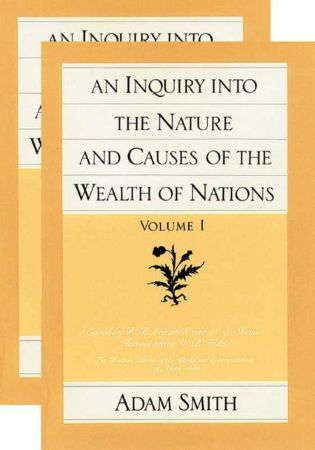
In this final episode, Munger assesses Adam Smith’s enduring ideas—the moral authorization of commerce, division of labor, emergent order—and confront where his optimism breaks: how democratic politics and business fuse to create monopoly privilege. The result is a maintenance‑intensive commercial order that needs competition defended, not assumed.
This the tenth and final episode in our series of podcasts with Mike Munger in anticipation of the 250th anniversary of The Wealth of Nations. The recording is also available via Munger's podcast, "The Answer is Transaction Costs" [TAITC].
Want to explore more?
Want to explore more?
- Michael Munger on Crony Capitalism, an EconTalk podcast.
- Paul Mueller, What is a Just Price? at Econlib.
- Jesse S. Cone, Did Adam Smith Promote Usury? at AdamSmithWorks.
- Watch An Animal That Trades, Part 3: Division of Labor at AdamSmithWorks.
- Read Munger's three-part essay series on Division of Labor at AdamSmithWorks.
Read the transcript.
This is Mike Munger, the knower of important things from Duke University. This is the tenth and final episode of the series on Adam Smith and the Wealth of Nations. This series is produced in cooperation with AdamSmithWorks at Liberty Fund, and I'm pleased to acknowledge the partnership of Amy Willis. Of course, at Liberty Fund, they call her Frau Willis. She's unpredictable, but I have to admit she's consistently unpredictable, so there's that.
This episode is an assessment of the impact and continuing importance of Adam Smith and the Wealth of Nations. Fortunately, or perhaps unfortunately, it turns out he is forever contemporary. Straight out of Creedmore, this is TAITC..
I thought they talk about a system where there were no transaction costs. It's an imaginary system. There always are transaction costs.
When it is costly to transact, institutions matter. And it is costly to transact.
Well, let me remind you, as I have in most of these episodes, that the edition that I'll be referring to is Adam Smith, An Inquiry into the Nature and Causes of the Wealth of Nations, edited by Campbell, Skinner, and Todd. It was published by Oxford's Clarendon Press in 1976, and reprinted and republished in a lovely paperback edition by Liberty Fund. There are many people who've affected how I think of Adam Smith generally, and the Wealth of Nations in particular. The three most important of these are Dan Klein, James Otteson, and Russ Roberts. But I also want to acknowledge Sam Fleischacker, Leonidas Montes, Maria Paganelli, Dennis Rasmussen, and Craig Smith, as well as my always positive yet deeply embittered friend Tom Scotto. I want to begin with what I think are the top five continuing impacts of the Wealth of Nations, and then turn to what I think is Smith's greatest failure and why it's a problem. The first continuing impact is he gives a moral authorization of commerce and a presumption in favor of private action. So Smith generally, but Wealth of Nations in particular, is important because they all argue for a default presumption for competitive markets as the normal way to organize society. Simply, there's a strong but rebuttable presumption in favor of liberty in Smith's approach. Now, Smith was no romantic apologist for markets. People on the left, beginning with [Jean-Jacques] Rousseau, [Karl] Marx, and their earnest apostles, all have remarkably romantic views of socialism. Either there are no problems, or if there are problems, they're caused by insufficiently public-spirited counter-revolutionary forces of evil, which must be crushed. That's just not true. Socialism fails because it's incoherent. Systems need to see with two eyes, information and incentives. Socialism fails on both counts. It can't succeed. Smith argued that commerce and markets are potentially coherent. They can succeed, but they can also fail, depending on institutions. He recognized the urge that elites have to carve out monopoly privileges and the tendency of commodification to stupefy workers and make them brutes. He advocated explicit state action to counteract those tendencies, but he still thought commercial society was the best way to organize human cooperative activity.
Smith didn't invent markets, but he made a powerful, durable case for three conditions that enable markets to emerge. Security of property, a populace guided by a sense of justice, prudence, and beneficence, and energetic competition among market participants. Note the difference. Take the same profit-seeking merchant. If faced with competition, the merchant will work to figure out ways to offer lower prices and higher quality. If protected by monopoly privileges, that same merchant will focus on raising prices and foreclosing entry of new firms. Even the greedy can be made to act marginally in the public interest if the government denies monopoly privilege. When those three conditions are met, property secure, people self-govern according to propriety, and markets are competitive, decentralized commercial exchange can coordinate vast amounts of activity without a central planner. And anticipating F.A. Hayek, Smith thought that attempts at central planning within a market system generally make things worse. That basic claim, the presumption in favor of liberty, still underlies modern policy debates about deregulation, privatization, competition policy, and trade. The burden of proof must fall on those who advocate intervention. The dirigistes must show why a selfish state monopoly will be better than decentralized competition. The social effect is that the Wealth of Nations normalized the idea that ordinary people's pursuit of betterment, bettering themselves, bettering their wealth, channeled through exchange and based on property rights, can be socially productive rather than morally suspect.
The second of the top five continuing impacts is Smith's centering of division of labor as the core engine of productivity and rising living standards. That pin factory is still doing work. Smith's enduring contribution is making specialization, not just capital accumulation or conquest and colonizing natural resources, feel like the central mechanism of growth. Modern growth economics, industrial organization, management science, and economic history all keep rediscovering versions of Smith's insight. Productivity jumps when tasks, tools, learning by doing, and information incentive properties of organizations align. The social effect, the Wealth of Nations implies, though Smith could not have foreseen the modern world of extraordinarily varied careers, credentials, and professional activity as lived experience, is that we would see a constant growth in prosperity and progress if we just allow people to do what they want in order to better themselves, which is to pursue specialization and division of labor.
The third of the top five continuing impacts is the centrality of the invisible hand as a rhetorical and analytical template in literature, news reports. Pretty much that's how we refer to Adam Smith. Now, I've come to believe that this metaphor is overused. It's not as central to Smith's thought as many claim. Smith's main point is about division of labor. Invisible hand's a throwaway line. As I described way back in episodes one and two, Smith believed in emergent conventions and a kind of social evolution toward improvement. Improvement happens as a consequence of the two basic features of human nature: an interest in the welfare and opinion of others, and a propensity to truck, barter, and exchange. Those two core human features seem in conflict, but in fact, they create a powerful synergy. Now, improvement is a tendency. It's not inevitable. Progress can be stalled or even reversed by bad state policies, particularly those motivated by market actors' greedy pursuit of monopoly privileges. But improvement is the core tendency of commercial societies if what Smith calls the system of natural liberty is allowed to do its work. Even when people disagree about what Smith meant, the invisible hand phrase became a talisman, a shibboleth. Unintended consequences can be systematically beneficial if institutions and competition align incentives. Today you see this logic in mechanism design, market design, and institutional analysis. Don't ask only what people intend, ask what rules coordinate divergent self-interest to make our actions socially compatible. In my 1997 presidential speech for the Public Choice Society in San Francisco, I claimed that the fundamental human social problem is the design or maintenance of institutions that coordinate individual self-interest with the common good or collective welfare. Smith claims the system of natural liberty is more robust and more effective in solving that problem than any other approach some man of system can devise. In principle, of course, that could be wrong. It's an empirical claim. I think a lot of people who advocate for capitalism as a natural rights or moral approach find that frustrating. But Smith is making an essentially empirical claim because he came from a movement, the Scottish Enlightenment, that took the experimental method of a science of man as being the primary goal. Still, I think even if it is just an empirical claim, the events of the intervening 250 years have, if anything, strengthened Smith's claim, not weakened them. So with the passage of 250 years since the publication of The Wealth of Nations, that empirical prediction has shaped up pretty well. Now, the social effect is that the Wealth of Nations reshaped the moral language around commerce. Legitimating commercial society is potentially cooperative rather than purely exploitative. Self-interest can be socially beneficial, even if I think Smith's description of that, the one we usually attribute to him about the invisible hand, has been excessively emphasized.
The fourth major continuing impact has been the durability, even prescience, I would say, of Smith's foundational critique of mercantilism, monopoly privilege, and rent-seeking. Smith's attack on the man of system and on politically protected guilds, charters, tariffs, and trading monopolies lived on as the intellectual ancestor of modern anti-crony capitalist arguments from both the left and the right. Public choice, regulatory economics from the University of Chicago, particularly [George] Stigler and [Sam] Peltzman, and corruption studies still echo Smith's basic suspicion. Concentrated benefits and dispersed costs equal durable bad policy. The effect of that is that Wealth of Nations sharpened a civic ideal. Law should be general, not tailored. Privileges are suspect and corrupting, and state power must not become a vending machine for organized interests, because organized interests are always going to be more powerful than the larger but unorganized interests of the public.
Finally, for the fifth of the great continuing impacts of the wealth of nations, it's important to recognize that the book was a modern template for the proper, that is limited but real, functions of government. Smith was not an anarchist, far from it. His system of natural liberty was a presumption in favor of private action, but defined a clearly laid-out and balanced portfolio of state obligations that remain recognizable in contemporary debates. Defense and justice, by which he means security, army navy, but also courts and rule of law, public works and institutions that private actors won't supply on adequate terms based on the profit mechanism, what we would now call public goods, and a serious concern for education and the conditions of a functioning commercial society. And that includes the social effects, the ability of people to participate in that society, not just creating wealth. This is why Smith remains claimable by multiple political traditions. He sets out a state that is neither all-providing nor absent. But in all cases, it's more like a gardener than an engineer. The job of the state is to ensure the conditions that foster commercial progress, make sure those are in place, and that seekers of monopoly privilege are thwarted. In those conditions, the system of natural liberty combined with a rationally conducted government will automatically produce prosperity and progress. Those things will emerge on their own. They don't have to be caused by direct government action.
Well, having outlined the five major reasons that Wealth of Nations has continuing relevance and significance, let me note what I see as the major failure, maybe shortcoming of the worldview laid out in the Wealth of Nations. Smith recognized, but underestimated, how badly capitalism can run when competition is tamed and power is organized, especially in a democracy. He knew that business hated markets and competition, but he underestimated how much democratic governments would be complicit or even active in creating new monopoly privileges. In modern public choice terms, he underestimated the power of rent seeking, and he underestimated the pathologies of a democratic culture. Governments need to be smaller and more limited than Smith believed, though a caveat on that later, because a government large enough to carry out these productive functions will also be active in non-productive and harmful parts of society.
To be clear, Smith saw monopoly and collusion clearly, but he did not foresee the full modern rent-seeking toolkit by which economic power and political power can fuse in a democracy. Regulatory capture at scale, sophisticated lobbying, platform and network effects, data advantages in bureaucracy, and financial complexity that outruns governance. The result is a recurrent gap between market outcomes in competitive theory and market outcomes in institutional reality. Smith points out over and over the difference between what business people want and what is required for competitive markets, but he failed to recognize what has now become a central axiom of public choice, motivational symmetry.
Now, as an aside, public choice has three parts, politics as exchange, motivational symmetry, and methodological individualism. Smith did not recognize motivational symmetry to nearly, I think, a sufficient degree. Smith appeals to legislators and state officials to act for the good of the nation. And it's because he knows that business people may act selfishly. In retrospect, that's naive. Motivational symmetry in public choice means that those who are part of government are just as self-interested as those who work in commerce. The way that self-interest plays out is different because the incentives vary. But if anything, the monopoly powers of the state, enforced by the threat of violence and coercion, attract the very most self-interested and power-hungry among us.
F.A. Hayek's famous “Why the Worst Get On Top” illustrates a problem that Smith knew about but didn't fully incorporate into his view of the state. The result is that while Smith may be quite correct that his portfolio of government responsibilities is plausible ;there's no reason to expect that the state will have the ability to govern itself and to limit its appetite for more. Thus, in modern societies, there's a vicious, recursive cycle. It's true, as was described by my article on crony capitalism in the Independent Review, that crony capitalism rewards corrupt market actors. But it's obviously possible, and there are many examples of this, for state actors to offer power themselves, to offer monopoly rent subsidies and favorable tax and tariff treatments in a kind of offer you can't refuse to even the most pro-commerce managers. So the role of the state in here is not passively accepting the actions of corrupt market officials like a vending machine. This is people doing door-to-door sales saying, you'd better buy this or your house may burn down. In short, Smith expects too much from government officials. Any government that has the power he lists is likely to metastasize and break out into other activities that were never intended or endorsed.
Now, I said there was a caveat. I agree with Dan Klein of George Mason University that many people overinterpret Smith's endorsement of state action. It's there. Smith wants a place for the state, but there's many qualifications and limits, and in every case, Smith argues for a presumption against state action. Even in the case where the state was already acting. The current idea that we see in public policy, markets fail, therefore the state should act, is not Smith's model. That's comparing markets as they are with the state that we can imagine. Smith's a clear-eyed comparativist. Both state actors and commercial agents are flawed. One should consider how things actually work. Intentions, or worse, stated intentions, should not be trusted. What actually happens? Still, having said all that, I think it is fair to say that Smith was too optimistic, how that failure echoes today. Market concentration and durable entry barriers, rotating extendable patents on pharmaceuticals, for example, can make invisible hand stories stop working in practice. Electoral incentives can turn policy into rent allocation rather than rule setting. Now, Smith didn't understand the coming of hyper-democracy. Dan Klein, I think, does a good job of saying that this is where Smith's view breaks down because he didn't expect the democratic culture to replace the commercial culture that he saw developing around him. The optimistic inference that markets cause broadly shared prosperity becomes fragile unless institutions actively maintain contestability, transparency, and equal standing before the law. Rent seeking reduces prosperity, and the ownership of rents can keep prosperity from being broadly shared.
If I had to put it in one sentence, Smith sometimes gets read as offering a self-maintaining commercial order. The modern experience is that commercial orders are maintenance intensive. Competition must be defended, not assumed. Now, maybe defended from government, but nonetheless. My friend Richard Salzman objects to this formulation, saying it's the government's actions to maintain that cause the problem. Salzman and I have a paper on “too big to fail” along these lines. The fact that failed banks will be bailed out if they're too big means that the incentives to get too big distort market processes. What that means is that the commercial order is not self-maintaining in a democracy. It can tend toward cronyism, as I argued in that paper in the Independent Review. Well, there's the summary. If that's all you have time for and don't need details, you can end there. Thanks for listening. I hope you won't, but you might stop. If so, it's been a pleasure. Happy 250th birthday, Wealth of Nations. If you're still listening, you must want more. For the rest of this episode, I'm going to expand on what I said in that opening summary. I'll break down the five continuing influences and give more details on what I think is Smith's greatest failure to recognize problems.
Here we go. Continuing implication number one, the default presumption is markets. First, Smith gives a moral authorization for markets. Here's a snippet from a podcast that Russ Roberts did on the Econ Talk Book Club with Dan Klein. I can't improve on it, and so I am just going to include it.
In a very significant way, I think that the Wealth of Nations is probably the most important ever moral authorization for the honest pursuit of profit for commercial behavior, which means that you shouldn't feel guilty about pursuing honest profit. You shouldn't speak ill and be antagonistic towards your neighbors and fellows who pursue honest profit. And it's also a moral authorization to address to the statesman, the sovereign, however you want to think about it, the legislator. Let people pursue honest profits in this commercial way. It actually works out well. The Wealth of Nations is a moral authorization of those different types, which I think is very important to understand the whole project. I also believe, I happen to fancy the idea that his moral authorization was actually very, I mean, his specifically, was actually very significant in the extent to which the Industrial Revolution, you know, arose so rapidly and so successfully, the sort of explosion that really follows just about his death. Because I think that the moral authorization matters, culture matters.
I'm going to go through some of the key passages in Smith that expand and explain how competitive markets should be the normal organizing principle, the limited case he makes for central direction, and the social moral rehabilitation of ordinary self-betterment through exchange that Smith advocates. I'll give some page references as benchmarks, but for the most part, I'm just going to go back and forth between quoting from Smith and commenting on those quotes. Smith's strongest baseline statement is his claim that once preference and restraint are removed, the market order is not something that we construct by planning.
All systems, either of preference or of restraint, therefore, being thus completely taken away, the obvious and simple system of natural liberty establishes itself of its own accord. Every man, as long as he does not violate the laws of justice, is left perfectly free to pursue his own interest his own way, and to bring both his industry and capital into competition with those of any other man or order of men.
Close quote. That's on page 687. You can see the burden of proof framing that Smith is using, because steering private actions tempt statesmen into making systematic errors. On that same page, 687, he says,
The sovereign is completely discharged from a duty in the attempt to perform which he must always be exposed to innumerable delusions, and for the proper performance of which no human wisdom or knowledge could ever be sufficient. The duty of superintending the industry of private people and of directing it towards the employments most suitable to the interest of the society.
End quote. Well, that is a clear foreshadowing of the arguments that Friedrich Hayek and Austrian economists made about the information problem. Smith then pins down the famously limited government remit Defense, Justice, and certain public works or institutions. Quoting:
According to the system of natural liberty, the sovereign has only three duties to attend to. First, protecting the society from the violence and invasion of other independent societies. Secondly, establishing an exact administration of justice. And thirdly, public works and public institutions, which it can never be for the interest of any individual to erect and maintain.
He then considers how the decentralized exchange coordinates vast amounts of activity without a planner. His micromechanism for coordination is the gravitational pull of high prices and profits plus entry and exit in response to profit signals. In Book One's natural market price discussion, he describes the market as self-correcting towards a central benchmark, which he calls the natural price. Now he didn't have the tools of equilibrium, but natural price is the cost of production. If entry is possible, the market price tends towards the cost of production, though, of course, the cost of production may rise as a result of the increased use of less productive resources. So natural price here is an unfortunate vestige of the Aristotle-Aquinas formulation, which is too static really to be able to do the job. But here's what Smith says.
When the quantity brought to market is just sufficient to supply the effectual demand and no more, the market price naturally comes to be either exactly or as nearly as can be judged of the same with the natural price. The competition of the different dealers obliges them all to accept of this price.
The natural price, therefore, is, as it were, the central price, to which the prices of all commodities are continually gravitating. That's on pages 74 and 75. He extends the no planner required logic to the allocation of capital across sectors. Quoting:
But if from this natural preference they should turn too much of it towards those employments, the fall of profit in them and the rise of it in all others will immediately dispose them to alter this faulty distribution. Without any intervention of law, therefore, the private interests and passions of men naturally lead them to divide and distribute the stock of every society as nearly as possible in the proportion which is most agreeable to the interests of the whole society.
End quote, that's on page 643. He then brings up the stadial theory, quoting,
Among nations of hunters, as there is scarce any property, so there is seldom any established magistrate or any regular administration of justice. But avarice and ambition in the rich are the passions which prompt to invade property. Wherever there is great property, there is great inequality. It is only under the shelter of the civil magistrate that the owner of that valuable property can sleep a single night in security, and from whose injustice he can be protected only by the powerful arm of the civil magistrate continually held up to chastise it. The acquisition of valuable and extensive property, therefore, necessarily requires the establishment of civil government.
End quote. 1776, to be fair, is before the great economies of scale of railroads, steel, oil, and so on, and before the great democratic revolution that put great power to pick winners and losers in the hands of majorities. So Smith can be perhaps forgiven for being a little bit too optimistic about competition being the default state. Competition versus monopoly for him is private versus public action. And that's why he thinks intervention must justify itself because any public action is an interference with the competitive actions of the market. Smith's pro-market presumption is inseparable from his anti-monopoly stance. Monopoly is the canonical case where the natural competitive outcome is blocked, and prices can be held above natural levels. Quoting:
A monopoly granted either to an individual or to a trading company has the same effect as a secret in trade or manufacturers. The monopolists, by keeping the market constantly understocked, sell their commodities much above the natural price. The price of monopoly is upon every occasion the highest which can be got. The natural price, or the price of free competition, on the contrary, is the lowest which can be taken. Not upon every occasion, indeed, but for any considerable time together.
That's in volume one, page 77. Close quote. It would be more accurate to say that prices tend towards the cost of production rather than towards the natural price, but as I said, I won't mention that again, but that that is an important drawback. But he didn't have any of the tools of equilibrium theory. So his intuition is actually pretty good. If you every time you see natural price, you replace it with cost of production, it pretty well goes through. When Smith turns to the mercantile system, he treats monopoly as the central instrument by which policy, this is his word, deranges the more socially advantageous distribution of stock. So, quoting,
All the different regulations of the mercantile system necessarily derange more or less this natural and most advantageous distribution of stock. Monopoly is the great engine of both. Monopoly of one kind or another, indeed, seems to be the sole engine of the mercantile system.
That's on page 643. This is a very difficult problem that Smith has opened up. He is trying to come up with a moral justification for the honest pursuit of profit. But he is now showing that there may be profits and in fact substantial profits, and most of the profits in a mercantile system that is not honestly pursued. It is pursued through the dishonest means of using the coercive power of government rather than the competitive power of markets. And this is a remarkably modern view, and Smith should get credit for it.
The key aspect of Smith's moral authorization is the claim that self-interest and betterment as socially productive, not morally suspect actions, are a big part of private commercial activity. Two classic passages do most of the work for his claim of moral authorization. First, exchange is not built on benevolence, but on mutually recognized advantage. As Smith puts it, he will be more, he, the consumer, uh, or person who wants to buy something,
He will be more likely to prevail if he can interest their self-love in his favor. Whoever offers to another a bargain of any kind proposes to do this. Give me that which I want, and you shall have this which you want, is the meaning of every such offer. It is not from the benevolence of the butcher, the brewer, or the baker that we expect our dinner, but from their regard to their own interests. We address ourselves not to their humanity, but to their self-love.
That's on page 42 of Volume One, close quote. As I noted in an earlier episode, Karl Marx read this and said, Well, obviously, this has nothing to do with morality. That's a misreading. What Smith should have said, and I think in fact what he obviously does say in any charitable reading would recognize this, it is not only from the benevolence of the butcher, the brewer, or the baker that we expect our dinner. Benevolence has a place here, and Smith in Theory of Moral Sentiments talks about benevolence and justice and prudence. Those are the three things that motivate human beings. But again, in the earlier episode, I talked about Walter Williams' example of commercial processes economizing on the scarce resource of love or benevolence. The reason why people in New York get steak from Texas and potatoes from Idaho is not that people in Texas love someone in New York or people in Idaho love someone in New York. It is from their self-interest. Smith recognizes we have to operate at scale. And operating at scale in order to take advantage of division of labor requires that we economize on love. So it is not only from the benevolence of the butcher, the brewer, or the baker that we expect our dinner. Once you read it that way, then a lot of the contradictions that people have tried to motivate the Adam Smith problem just fall away. It's not accurate.
Well, I said there were two aspects of the moral authorization. The second is that Smith believes the ordinary motive of improving one's condition is actually a deep engine of social progress, something that's resilient enough to overcome bad policy. Quoting:
The uniform, constant, and uninterrupted effort of every man to better his condition, the principle from which public and national as well as private opulence is originally derived, is frequently powerful enough to maintain the natural progress of things towards improvement in spite both of the extravagance of government and the greatest errors of administration.
That's volume one, page 289. I think it's important to recognize that in giving moral endorsement to commerce, Smith is extending and fleshing out a role that earlier had been played by Thomas Aquinas. Thomas Aquinas gave an ethical endorsement to trade and exchange. Might seem to us like a tepid one, but nonetheless, it was a crucial green light to the development of commerce in medieval Europe. Comparing Smith to Aquinas in terms of the moral rather than economic significance of the contributions may seem nuts. Aquinas, after all, doesn't bless capitalism in anything like a modern sense. What he does do, though, crucially for medieval Europe, is to fit buying, selling, property, and some kinds of profit-seeking inside a coherent Christian account of justice and virtue, rather than treating commerce as a necessary moral stain. Aquinas says that commerce is not necessarily a sin. That's huge. In Summa Theologica, Question 66, Aquinas argues that private ownership is lawful, even if the use of goods should remain ordered to the needs of others, because private responsibility improves care, order, and social peace.
That move that Aquinas makes matters for commercial society. Stable possession and transfer become not merely tolerated custom, but something that can be defended within natural law reasoning. In question 77, Aquinas treats market exchange as a normal part of social life, morally accessible by the standards of truthfulness, no fraud, and fair equivalence, rather than as inherently suspect. So importantly, exchange is governed by justice, not by charity. You haven't an obligation to be charitable in commercial relations, you only have to be just. As James Otteson said, justice requires that we respect person, that we protect property, and we keep our promises. So if I haven't promised to provide charity or act in a benevolent way, I'm not obliged to in a commercial transaction. So again, that is a huge difference. Aquinas explicitly links injustice in trade to cheating and deception and to taking advantage of informational asymmetries, even when civil law might allow it. And he notes legal traditions, remedies when the deviation is very large, that anticipate later doctrines like Lisia enormous, saying that a contract is unconscionable or invalid if it is grossly unfair. Usually the rule is that if the contract is grossly unfair, it might be more than one half of the actual value. But still, the honest pursuit of property is authorized by Aquinas. Merchant activity and profit, then, are permitted if they are for legitimate ends.
Aquinas' most commercially authorizing move is that profit is not evil per se. The Aristotelian tradition was that exchange in pursuit of household is fine, even noble, a technique. This was pursuit of value in use, but exchange in pursuit of monetary gain was questionable. This was value in exchange, where things are acquired because they can be sold to make money. So trade can be licit if it serves a real social function, distribution, transport, provisioning, and if gain is moderate in order to household support, public benefit, or almsgiving, not pursued as an end in itself. That intention plus social use framing is a big step away from a blanket moral stigma on merchants. It's not a blanket moral endorsement, but it is a big change compared to a blanket moral stigma. So I think a nice way to put it is that Aquinas moralizes commerce by normalizing it. He placed it inside ordinary justice, while also moralizing it by insisting it be disciplined by virtue. Smith is so much a part of this tradition that he doesn't even mention it. But ignoring that context is to misunderstand Smith's entire message.
What difference did that endorsement of Aquinas make in medieval and Renaissance Europe? Well, Europe already had commerce, but it changed the moral and institutional terms on which commerce could expand. It legitimated the merchant as a respectable social role. There's a long historiography that had painted medieval thought as being anti-commercial, but more recent thought stresses that major scholastics, particularly including Aquinas, often treated competitive market price as the just price, defended profit as compensation for labor and risk, and criticized monopoly as contrary to charity and justice. That matters sociologically. If profit, if not earned by a monopoly, can be morally intelligible, merchants become socially legible. We can see them, we can talk about them. It doesn't have to be hidden. [John] Locke's Venditio, for example, takes up this question and comes to the conclusion that there are certain circumstances where the market price, if there are many buyers and many sellers, is also the just price. Aquinas provided a moral legal vocabulary for contracts, price, and credit. Much of what he is doing later influenced the casuists, the people who thought that there should be an exhaustive list of inputs and outputs. That is, if you have a set of facts, you have to be able to write down what the appropriate moral action is.
Aquinas' different questions on fraud, disclosure, restitution, and just exchange provided a toolkit for those later canonists and theologians who were interested in casuism. Even when merchants and bankers worked around the restrictions, they often did so in the language that Aquinas helped systematize risk-sharing partnerships, forms of compensation, and so on. The upshot is not laissez-faire, but a rule-governed commercial sphere. So Aquinas provides a bridge into early modern natural law and liberal political economy. Karen Vaughn, a longtime history of thought scholar at George Mason University, has some great insights into understanding how Aquinas influenced future events. There's a direct flow from scholastic economic justice into Locke and self-ownership and agency. And so that connection through Locke clearly influenced both England and the United States. In Karen Vaughan's bibliographical essay on Locke, she notes that Locke is read within a natural law tradition that includes scholastic Aristotelianism. She reports how interpreters use Locke's notes on the just price to show lingering Christian scholastic concerns about economic justice. She also emphasizes that Locke can say market price is the just price, and that entrepreneurial activity yields a fair and equal account, an explicitly market-compatible idea that echoes the scholastic move away from intrinsic value moralism. There are, though, limits on Aquinas' moral endorsement and authorization of capitalism. There are ways that Thomism held commerce back.
So Aquinas legitimates commerce but conditionally. And those conditions, not surprisingly, are where the breaks are. First, the usury prohibition. It meant that you often had to find a workaround in order to be able to get a loan or raise capital. There are just price constraints. There's no exploiting need, deception, or monopoly. And the big problem is just price may require no exploitation of desperate need. But saying that I won't sell it to you because you need it seems paradoxical. Aquinas insists that taking advantage of another's urgent need is morally illicit. Fraud, strategic concealment can trigger duties of restitution. Well, the second part is certainly right. Fraud is wrong, but an honest sale because some person really needs something, they really want it, that's much harder to justify in modern economics. So that can chill certain profit strategies that modern commercial society treats as legitimate arbitrage or pricing under extreme scarcity. Also for Aquinas, intention matters. Gain, the desire for gain, must be subordinated to virtue. Aquinas' permission for profit is structurally limited by his insistence that profit be ordered to necessity or honorable ends, not the craving of profit as an end in itself. That moral psychology is the real constraint, especially in a culture where confession, penance, and reputational sanctions are salient.
If you put the pieces together, Aquinas authorized commercial society by making property, exchange, and merchant profit morally disgustable with injustice rather than being morally alien. But he simultaneously civilizes and constrains commerce by limits on usury, strict anti-fraud norms and restitution duties, and the demand that economic action be ordered to virtue in the common good. Karen Vaughn's way of connecting this to later commercial society is to show how the just price and economic justice themes remained live as late as Locke, sometimes explicitly pro-market, in the sense that the market price is the just price. And Vaughn also talks about how modern economics still carries ethical residues that are reminiscent of the just price or exchange of equivalents thinking. So Aquinas' casuism is aspirationally determinate. It tries to discipline moral judgment by giving you a rational pathway from principles to a correct verdict in that case, while admitting structurally that particulars are still messy and important.
Smith's loose, vague, and indeterminate means that most virtue can't be codified into decision procedures. Smith's claim is not that moral life is random. It's that only one domain of morality is rule precise in anything like a legal sense, and that's justice. As I noted in several of the podcasts, this is quite close to James Buchanan's “relatively absolute absolutes,” an ideal, or rather a phrase, that comes from Buchanan's mentor, Frank Knight.
Smith draws his famous contrast: the rules of justice are precise and accurate, while those of all the other virtues are loose, vague, and indeterminate. And he makes the methodological punchline explicit. Some writers, the casuists, quoting now from Smith, “…endeavor to lay down exact and precise rules for the direction of every circumstance of our behavior.” End quote. But this kind of precision really fits justice best. It is not appropriate for our understanding of commercial society. Smith even defines the target. It is the end of casuistry to prescribe rules for the conduct of a good man. For Smith, outside justice, virtue is more like taste. His grammar or criticism analogy, that in questions of style, you can't have hard and fast rules. They're loose, vague, and indeterminate. For Smith, outside justice, virtue is more like taste. You can be educated toward better judgment, but you can't get certain and infallible directions. There is a place where Aquinas and Smith unexpectedly connect. Aquinas' own warning that principles fail more as we add conditions and descend into detail. That's structurally close to Smith's insistence that outside justice, quoting, language wants names for the endless variations. So precision runs out. They agree on the messiness of particulars. Smith and Aquinas disagree on whether moral theory can and should systematically domesticate that messiness. The best way to understand the difference is to mention David Hume. Sometimes when I've told some Catholic friends that I admire Hume, they're upset, actually offended. They see Hume as a relativist. I don't. I just see him as not an absolutist. The classic Thomist idea that one can, and actually should, specify an exhaustive list of contingent conditions and actions that are required, permitted, or prohibited is unappealing to Humeans. And Smith was largely a Humean being.
The second continuing influence of Wealth of Nations is the emphasis on division of labor. Division of labor is the engine of productivity and rising living standards. Smith opens with the strong claim that division of labor is the main source of productivity advance. “The greatest improvement in the productive powers of labor seem to have been the effects of the division of labor.” Smith's example of the trifling manufacturer, the pin factory, makes the mechanism vivid. Tasks are split, coordination rises, and output explodes.
The important business of making a pin is divided into about eighteen distinct operations. I have seen ten men only make among them about twelve pounds of pins a day. Those ten persons could make upwards of 48,000 pins in a day. Without specialization, each could not make twenty, perhaps not one pin in a day.
That's volume one, page 37. End of quote. Why does productivity jump? Well, the answer is increasing returns. For example, four can make ten times, not twice as much as two workers. So Smith explains this by saying that it is owing to three different circumstances.
First, to the increase of dexterity, secondly, to the saving of the time, and lastly to the invention of machines. [Dexterity, or learning by doing, means that you're reducing every man's business to one simple operation.] It necessarily increases very much the dexterity of the workman.
On page 38. Then Smith talks about switching costs. He gives a kind of psychology of work point.
A man commonly saunters a little in turning his hand from one sort of employment to another. His mind does not go to it. He rather trifles than applies to good purpose. The habit renders him slothful and lazy and incapable of any vigorous application.
And then machines and tools. Innovation from focused attention. Quoting:
The invention of machines seems to have been originally owing to the division of labor. People discover improvements when the whole attention of their minds is directed towards that single object.
That's on page 39. Smith's famous concrete example is a child automating a valve to get free time for play. He's talking about a valve on a steam engine. A boy observed that by tying a string, the valve would open and shut without his assistance. As a consequence, one of the greatest improvements was the discovery of a boy who wanted to save his own labor. That's on page 40. Now, that story appears to have grown out of a misreading, although not necessarily Smith's misreading, of a passage in the book A Course of Experimental Philosophy. In that book, the account that's given is, quoting,
They used before to work with a buoy in the cylinder enclosed in a pipe, which buoy rose when the steam was strong and opened the injection and made a stroke. Thereby they were capable of only giving six, eight, or ten strokes in a minute. Till a boy, Humphrey Potter, who attended the engine, added what he called a scoggin, a catch that the beam cue always opened, and then it would go fifteen or sixteen strokes in a minute. But this being perplexed with catches and strings, Mr. Henry Byton, in an engine he had built at Newcastle on Tyne in 1718, took them all away, the beam itself simply supplying all much better.
End of quote. Well, that book was in 1744. It's describing an incident, a supposed incident in 1718. There's not very good evidence that it ever actually happened, but it was described so often that Smith took it as true. And in any case, it is interesting to have the actual background story. Returning now to Wealth of Nations, Smith explicitly connects specialization to broad-based material improvement.
Division of labor occasions that universal opulence which extends itself to the lowest ranks of the people. Observe the accommodation of the most common artificer or day laborer. The number of people employed exceeds all computation.
But what does he mean? Pause quote. What does he mean by accommodation? He's talking about the woolen coat. On a cold day, this most common artificer or day laborer wears a common woolen coat. So back to the quote: “The woolen coat is the produce of the joint labor of a great multitude of workmen”. On pages 40 and 41. So the social effect of division of labor means that we have many different professions that can combine in making a woolen coat in 1776. Today it combines in creating careers, credentials, and professional identities that Smith could never have dreamed of, but that he did in a sense anticipate because it's consistent with his theory of the division of labor. So there are differences in characters that arise from occupational sorting, training, and experience. And this is on page 43 and 44 where Smith talks about the philosopher and the street porter. Quoting, “The difference between a philosopher and a common street porter seems to arise not so much from nature as from habit, custom, and education.”
Smith then emphasizes how early and how strongly occupational paths diverge, quoting again, about that age they come to be employed in very different occupations. And he gives the structural constraint. Specialization grows with market size, which is why town matters. The extent of this division must always be limited by the extent of the market. A porter, for example, can find employment in no other place than in a great town. But the psychological cost of the division of labor, Smith was also aware of and concerned about. The most explicit psychological cost is described in volume two with his discussion of public institutions and education. His core example is a worker whose life is confined to a tiny set of tasks. The man whose whole life is spent in performing a few simple operations has no occasion to exert his understanding. He generally “becomes as stupid and as ignorant as it is possible for a human creature to become.” That's on page 782. Smith then spells out the social psychological consequences: conversation, sentiment, judgment. If people have access to those things, then they may not have to get stimulation from their jobs. Quoting,
The torpor of his mind renders him incapable of any rational conversation and incapable of conceiving any generous, noble, or tender sentiment, hence, incapable of forming any just judgment concerning the ordinary duties of private life.
Well, end of quote. Quoting,
Of the interests of his country, he is altogether incapable of judging. He is incapable of defending his country in war. The uniformity corrupts the courage of his mind, makes him regard with abhorrence the life of a soldier. His dexterity seems acquired at the expense of his intellectual, social, and martial virtues. This happens to the laboring poor unless government takes some pains to prevent it.
So this failure is actually a product of success. We become more wealthy, but we become softer, and we may lose the ability to think, to make plans for ourselves, to think for ourselves, to participate in government. Smith contrasts this with what he calls barbarous societies, where varied tasks keep mental invention alive. “The mind is not suffered to fall into that drowsy stupidity.”
The third continuing influence of the wealth of nations is the invisible hand metaphor. Now, Smith's invisible hand is not a theorem. He would be mystified and I think annoyed by the use that technical economists make of what they call the first and second welfare theorems that reference the invisible hand metaphor. The idea of emergent orders is simply a way of summarizing positive sum systems of human activity. For the pin factory, for example, why 18 stations are operations? It's the extent of the market. If the market gets bigger, that is, we can sell more, there will be more stations. Or we can try to expand the market first. Either way, the degree of division of labor determines productivity up to a point, but the profitability of productivity increases are limited by the extent of the market. By trying to expand profits, producers cut costs. It may not be planned or intended. It may be planned or intended. The point is that it happens.
For the invisible hand, several things matter. First, unintended consequences, but conditional, not automatic, outcomes. Smith never claims self-interest is good. The point is, ladies and gentlemen, that greed, for lack of a better word, is good. Greed is right. Greed works. Well, the movie Wall Street was made by a filmmaker who neither likes nor honestly understands capitalism. That's fair enough. You can make movies. What's strange is that some defenders of capitalism have latched onto Gordon Gecko's speech. The fact is that Adam Smith's invisible hand, even if you ignore the fact he didn't consider it central to his argument, has nothing to do with greed in the first place. He's on Team [Francis] Hutcheson, not Team [Bernard] Mandeville. Smith's claim is that given certain rules and circumstances, such as security of property, competition, predictable law, tolerable justice, private aims can generate social benefits that nobody foresaw or expected. Some institutions coordinate interests, and some institutions antagonize self-interest and set people at odds. The prisoner's dilemma means that self-interest makes us all worse off. It's not automatic. So the claim that markets work automatically and that there's an invisible hand, that's an argument, but it is not Smith's argument.
Second, the social moral language shift. Commerce was seen as antagonistic. Smith just wants to argue that it's potentially cooperative. That is, it has a positive sum. We can all be better off. In the background is an 18th-century moral suspicion of commerce, of luxury, corruption, exploitation. Smith doesn't deny those dangers. Instead, he argues that commercial society can be coordinative, a way that strangers cooperate through exchange if institutions restrain predation and privilege. The invisible hand phrase becomes a memorable emblem for that reframing, but it was not central to Smith's argument. Now, as many people know, there's three uses of the invisible hand metaphor. The first was in the History of Astronomy. It's often called Lectures on Astronomy, that's a mistake. There was Lectures on jurisprudence, but History of Astronomy is the correct title of that monograph. So what Smith said in History of Astronomy, quoting,
For it may be observed that in all polytheistic religions, among savages as well as in the early ages of heathen antiquity, it is the irregular events of nature only that are ascribed to the agency and power of their gods. Fire burns, water refreshes, heavy bodies descend, and lighter substances fly upward by the necessity of their own nature, nor was the invisible hand of Jupiter ever apprehended to be employed in those matters. But thunder and lightning, storms and sunshine, those more irregular events, were ascribed to his, that is Jupiter's, favor or his anger. Man, the only designing power with which they were acquainted, never acts but either to stop or to alter the course which natural events would take if left to themselves.
End of quote. And again, that's from History of Astronomy. Smith's explaining how early polytheistic superstitions assign divine agency only to irregular events. Regularities, fire burns, heavy bodies fall, are treated as nature's own necessity. But thunder, storm, sunshine, the irregular stuff, that gets attributed to Jupiter's favor or anger. The invisible hand here is mocking. It's not market coordination at all. It's a satirical marker for the human impulse to invent hidden agents to soothe their anxiety about disorder and chaos. This is consistent with Smith's view of what he called wonder in history of astronomy. We want to come up with explanations. And in that context, sometimes the explanations that we come up with is the favor or disfavor of the gods. So the invisible hand of Jupiter is nonsense. It's not there. And so strike one.
The second use of invisible hand was in the Theory of Moral Sentiments in part four, chapter one. Here's the exact wording of Smith's phrase.
The produce of the soil maintains at all times nearly that number of inhabitants which it is capable of maintaining. The rich only select from the heap what is most precious and agreeable. They consume little more than the poor, and in spite of their natural selfishness and rapacity, though they mean only their own conveniency, though the sole end which they propose from the labors of all the thousands whom they employ be the gratification of their own and insatiable desires, they divide with the poor the produce of all their improvements. They are led by an invisible hand to make nearly the same distribution of the necessaries of life which would have been made had the earth been divided into equal portions among all its inhabitants, and thus, without intending it, without knowing it, advance the interest of the society and afford means to the multiplication of the species. When Providence divided the earth among a few lordly masters, it neither forgot nor abandoned those who seem to have been left out in the partition. These last two enjoy their share of all that it produces. In what constitutes the real happiness of human life, they are in no respect inferior to those who would seem so much above them.
End of quote. The fact that people invest in new things and try to make new products and try to make more of them has a positive effect on everyone else. But it's not a reconciliation of self-interest generally. It is a leveling of the very wealthy and powerful who don't get all that they imagine in their minds. So Smith is describing the proud and unfeeling landlord who imagines he can consume the whole harvest, but physically can't. His eyes are bigger than his mouth. So he must distribute most output to servants, artisans, and workers. The rich select from the heap what's most pleasing, yet consume little more than the poor, and without intending it, their pursuit of luxury ends up sustaining many livelihoods. And, Smith adds, the multiplication of the species. It's a morally ambivalent story. The rich are selfish, and they're taking for themselves out all the best things, but social provisioning still occurs through the structure of dependence and production. It has nothing to do with markets. It has nothing to do with markets. The invisible hand is just irony here. The claim that this is the center of Smith's worldview is just absurd.
Third, and the most famous use in[Wealth of Nations] Book 4, Chapter 2. The exact wording of Smith's phrase is"
By preferring the supportive domestic to that of foreign industry, he, that is the trader, intends only his own security, and by directing that industry in such a manner as its produce may be of the greatest value, he intends only his own gain. And he is in this, as in many other cases, led by an invisible hand to promote an end which was no part of his intention. Nor is it always the worse for the society that it was no part of it. By pursuing his own interest, he frequently promotes that of the society more effectually than when he really intends to promote it.
End of quote. Well, what Smith is doing here is an argument against mercantilist restrictions. He says investors often prefer domestic to foreign employment of capital for security. That is, it is easier for them to keep an eye on their investments. They try to direct industry toward the highest valued output. The combined effect is to increase domestic industry and the society's annual revenue, even though the individual neither intends nor understands that public benefit. He immediately, Smith does, adds a skeptical jab at performative, public-spirited trading. I have never known much good done by those who affect to trade for the public good. The use of this phrase, invisible hand, doesn't come up again. What he's talking about is an emergent order. And this idea of that Adam Ferguson summarized as the result of human action, but not of human intention. That's the description that Smith is going for. So this notion that invisible hand is not really the centerpiece of Smith's argument is a major theme in Gavin Kennedy's critique of the metaphor to myth trajectory.
These three, and in this I agree with Gavin Kennedy, these three uses of invisible hand don't line up in any single clean doctrine. The hand in astronomy is about superstition and irregularity. In Theory of Moral Sentiments, it's about distribution amid inequality. And in Wealth of Nations, it's about domestic investment or security under mercantilist conditions. That heterogeneity of application undermines the later habit of reading it as a single proposition, like markets are efficient, the first welfare theorem. So Kennedy emphasized this, and you see this later, Klein and Lucas and other responding to Kennedy. The question of whether Smith understood what we now see as the modern theory of market competition. I think he'd be mystified. The invisible hand is at most a rhetorical flourish, possibly ironic. Emma Rothschild, I think, goes too far in this direction. She says that Smith did not especially esteem the invisible hand. The image is best read as ironic. She called it a mildly ironic joke. So that claim is made in her 1994 American Economic Review piece and developed in her later work. It's repeatedly cited in the public subsequent literature. I think that goes too far.
Modern economists have turned the invisible hand into an ideology marker. Warren Samuels and some other contributors have argued that Smith's meaning is underdetermined by the text. We're reading too much into it, and there's an element of anachronism here. We're going back with how we now think of it and saying that's how Smith thought of it. So “invisible hand” became a device for later economists to use, a place for them to tie down their later arguments, especially in 20th century textbook and policy rhetoric, to associate modern high theory and market apologetics with Smith. So Warren Samuels' framing is explicitly about the metaphor's later career as ideology and language. So what to make of this? My conclusion, I'm afraid, is going to be unsatisfying. It's the best I can do. I believe that this is the view that's held by Dan Klein, James Otteson. I may be wrong about that. So let's just say it's my view.
The specific words, invisible hand, are not central to Smith's thought. It's a rhetorical throwaway. It's a clever, sarcastic little tidbit. He'd be amazed we think it was his central contribution, instead of division of labor, which he thought was his central contribution. Second, it's a metaphor, not a simile. It is frequently misquoted as if by an invisible hand. He never said that, at least not in print. There's no evidence he said it verbally. It's just a cute little metaphor, not a deep model. If somebody misquotes Smith by saying, as if by an invisible hand, you should mock them, maybe pour a drink on their head. They're a charlatan. Smith never said that. On the other hand, the concept of how we have come to understand and use the idea of invisible hand is absolutely central to Smith's thought and to the Scottish Enlightenment generally. The idea that the direction of progress and the ability to correct errors of commercial society emerges from the actions, but nowhere from the immediate intentions of commercial actors is an excellent representation of Smith's model, his approach, and conclusions. So my own solution is to use invisible hand without quote marks. What we refer to as invisible hand mechanisms, in the sense of mechanism design, modern mechanism design, is quite consistent with Smith's intent. But Smith's own use of that phrase is never how we use the phrase. So it's a mistake to read too much into, in quotes, invisible hand, as some market advocates have done, but it's also a mistake to read in too little, as Kennedy and Rothschild mistakenly argue. I'd say that Smith was led by an invisible hand, no quotes, to give us a quotable way of summarizing the rest of his argument, though not his use of invisible hand, in quotes, itself.
Well, it's time for the big finish. Some final thoughts. The remaining two points from my outline at the beginning of this episode had to do with Smith's notion of the role of government, the influence of mercantilism and the practice of mercantilism, both domestically and in colonies, and then Smith's failure to understand fully the corrupting influence of government power on the easily corrupted actions of commercial actors. So those three are related. I'm going to consider them together because I think they belong as a cluster.
So Smith's discussion of international trade, he wants to switch the focus of the discussion from the balance of trade to gains from exchange. And you could say he was a failure because we're talking about balance of trade every day, at least in the United States. So Smith gives what I think is a pretty powerful metaphor for understanding balance of trade, and it's the prudent household analogy. It turns out that I have a terrible balance of trade problem with the local Piggly Wiggly grocery store. I often go into the Piggly Wiggly and buy things, and they never buy any of my books or pay me to give lectures. That's clearly unfair. I should call Donald Trump. Well, no. Why would there be any particular reason that you would expect there to be a balance from me wanting stuff from you and you wanting stuff from me? That's barter. That's basically the double coincidence of wants that a commercial system got us out of. So Smith's cleanest statement of this core trade idea is an analogy. It's a household-to-nation analogy. “It is wasteful to force domestic production of what can be purchased more cheaply abroad.” This is the make or buy decision. That is, if I can buy something more cheaply than I can make it, by definition that means that I should be buying it because there must be something else that I can do that I can make more with. Quoting:
It is the maxim of every prudent master of a family, never to attempt to make at home what it will cost him more to make than to buy. What is prudence in the conduct of every private family can scarce be folly in that of a great kingdom. If a foreign country can supply us with a commodity cheaper than we ourselves can make it, better buy it of them.
End quote. Well, that passage does two enduring things for trade theory. It reframes imports as a cost-saving access to the world's cheapest suppliers, not as a loss. Second, it makes trade policy primarily a question of resource allocation. Capital and labor will move to more and less advantageous employments, not a question of bullion, just accumulating big piles of gold, silver, or in Donald Trump's case, stacking up that paper. A powerful nation has the discretion to use its power to further the interests of particular industries, using trade policy as a justification. Smith laments the power of this justification because it sounds so plausible. But as he shows, it's always used to benefit commercial interests when we should be trying to benefit consumers. So, again, how little things change. The balance of trade doctrine is everywhere a folly. Smith argues that mercantilism's intellectual engine, the balance of trade, is not merely a technical mistake, but a deep conceptual confusion that then rationalizes a big architecture of artificial and costly restraints. Quoting, “Nothing can be more absurd than this whole doctrine of the balance of trade, upon which not only these restraints, but almost all the other regulations of commerce are founded.” End of quote. He stresses that trade is not a zero-sum scoreboard in which one side loses when it imports. That's the key conceptual move that later theory formalizes. Trade as a mutual gain under specialization and exchange. The buy cheap, sell dear imperative that commerce forces, basically, on traders requires competition and openness. And that explains why treaties, tariffs, and direct international negotiations often misfire. So even when Smith concedes strategic exceptions, like the Navigation Acts or defense, national security, he states the general principle. A nation buys cheap when it encourages many sellers to bring goods in and sells dear when its markets are full of buyers, that is, when policy maximizes competition, not monopoly. Quoting,
The interest of a nation is to buy as cheap and to sell as dear as possible, but it will be most likely to buy cheap when by the most perfect freedom of trade it encourages all nations to bring to it the goods which it has occasion to purchase, and to sell dear when its markets are thus filled with the greater number of buyers.
End quote. Smith here is making a public choice argument long before public choice. And he's actually quite explicit about it, more explicit than I had understood until I read Wealth of Nations closely. He talks about interest groups, rent-seeking, policy as a product to be sold by corruption. He repeatedly insists that bad policy persists not mainly because it's intellectually persuasive, because it's politically supported and fought for by groups with strong incentive, superior information, and organizing capacity. This presages the theory of Baptist and bootleggers, it presages Mancur Olson's The Logic of Collective Action and the exploitation of the large by the small, the dominance of interest groups that have concentrated benefits and policies that have diffuse costs. The core public choice wedge is that those with concentrated stakes in a sector have interests that diverge from and can oppose the general interest. Quoting,
The interest of the dealers is always, in some respects, different from and even opposite to that of the public. To widen the market and to narrow the competition is always the interest of the dealers.
End quote. That, unfortunately, is the experience that many pro-market people have had. If you try to get funding from business, you'll very quickly run up against the wall that business hates competition. Commercial interests, for the most part, hate markets. They want to get the government to help them control markets, to control competition, and either to get subsidies or some other way of supporting price. So, as I said, this is basically the Olsonian organized producers versus diffuse consumers logic that later became standard in public choice, regulatory capture, and antitrust. Narrow competition raises profits by creating what Smith calls an implicit tax on everyone else. And the size of the tax is bigger than the size of the benefit. But because it's concentrated, concentrated interests win in politics. The only solution is to insulate commerce from politics.
Smith recognizes the power of collusion and collective action. Combinations, attempts to control markets, are natural. They will happen in the private sector. Legal question is whether the state should facilitate them. Smith says it shouldn't. Quoting,
People of the same trade seldom meet together, but the conversation ends in a conspiracy against the public or in some contrivance to raise prices. Though the law cannot hinder, it ought to do nothing to facilitate such assemblies, much less to render them necessary.
End of quote. He then explains how incorporation makes combinations more durable and enforceable. Quoting, “An incorporation makes the act of the majority binding upon the whole and can enact a bylaw, which will limit the competition more effectually and more durably than any voluntary combination whatever,” end of quote. That anticipates modern accounts of how the law can create, stabilize, and enforce rents. How rent seeking is often legal engineering. So occupational licensing, for example, is the modern equivalent of the guilds that Smith rightly criticizes. Interest groups have a surprising level of power over democratic legislatures. He calls them formidable, says they intimidate the legislature. It goes beyond the bad idea of groups to describe political force, how monopolists can become a kind of organized power center, quoting, “the private interests of many individuals oppose freedom of trade.” The monopoly has become formidable to the government and upon many occasions intimidate the legislature. He's worried about monopoly privilege and rent seeking, and he has concrete institutional targets. He recognizes that the power of monopolies can be, as he puts it, written in blood. So there's some moral intensity here about the theft that monopoly privileges created and extended by government can impose on the populace. He describes producers extracting monopoly protection and says how this extreme policy, how extreme policy can become when organized interests succeed. The clamor of our merchants and manufacturers has extorted monopolies, like the laws of Draco. These laws may be said to be all written in blood. Now he's talking there about restrictions on exportation of wool, but it's a general point.
He sees empire and mercantilism as a project fit for a nation whose government is influenced by shopkeepers. Now remember the comparison he's making is not necessarily the government of shopkeepers, but it's influenced by shopkeepers. So his colonial discussion reads like a theory of how special interests can shape grand strategy, not just tariffs. So the shopkeepers' logic is that shopkeepers as such want empire, but that government influenced by them will pursue it. Quoting, “to found a great empire may appear fit only for a nation of shopkeepers.” Well, it's not, but extremely fit for a nation whose government is influenced by shopkeepers. So he narrates the rent-seeking move. English traders petition to confine American producers to their shop. They petition the parliament that the cultivators of America may be confined to their shop. Clause in the famous act of navigation establishes this truly shopkeeper proposal into a law. To Smith, mercantilism is producer politics. Consumers are systematically going to be sacrificed. He makes the distributional point quite explicit. Mercantilism repeatedly sacrifices consumers to organized producers. Consumption is the sole end of all production. But in the mercantile system, the interest of the consumer is almost constantly sacrificed to that of the producer. So that sentence, quoting from Smith, is both normative, what ought to guide policy, and positive, what actually happens under mercantilism and why mercantilism is so pernicious.
Well, what's interesting is that Smith has always been claimable by multiple political traditions. We talked about this a little bit earlier, where Dan Klein and Emma Rothschild read the same manuscripts and come up with very different interpretations. Smith draws a line between economic micromanagement, that is the state superintending private industry, a task exposed to innumerable delusions, and institution building, defense, justice, public works, instruction that markets won't supply on adequate terms. And depending which of those you emphasize, will say what side is claiming Adam Smith. Classical liberals, libertarians, can cite his strict limits on industrial direction and his insistence on justice as the boundary condition for freedom. Constitutional conservatives can cite his emphasis on defense, courts, institutional checks, judicial independence. Civic Republicans, some social democrats, can rightly cite his education arguments as essential to social order and competent self-government. The question is how you emphasize those things.
Dan Klein has claimed that Adam Smith is a universalist, he's a liberal, he's a conservative, and he's a civilizationist. Now, a universalist appeals to a universal standard of judgment, the good of the whole. And for Smith, that's represented by the impartial spectator. A liberal is a policy presumption for domestic affairs. Let individuals pursue their own interest in their own way, under a framework of equality, liberty, and justice, as long as they don't violate other people's rights. You can't mess with other people's stuff. Smith's definition of justice is abstaining from what is another's. A conservative is a respect for the status quo, norms, traditions, cohesion that sustain a stable functional polity. Smith certainly is that. On the other hand, Smith is also a civilizationist. He's attentive to how moral, legal ideas develop within different stages of society and how polities might interact with each other. There may be key differences because different civilizations are just different, and that's okay. And that's the Humean convention side of Smith.
So those four things seem in conflict, and I agree that they're in tension. But understanding that Smith is at once a universalist, a liberal, a conservative, and a civilizationist goes a long way towards helping us understand how Smith reacted to those different tensions. Smith then is a both and thinker. Universal benevolence remains the overarching moral horizon, but what it requires varies by circumstance. So universalism and civilizational variation are complements, not contradiction.
Well, there you have it. More than 15 hours of talking, more than a hundred hours of thinking and reading and thinking some more. I'm embarrassed by how much I've learned here because I thought I already knew quite a lot. I didn't. In many ways, I know less now, because many of the things I thought were clear in Smith are actually quite nuanced and carefully qualified. You have to read him closely, but the book rewards close reading. On the other hand, I do feel as if I've made a connection between Smith's approach and the later work of James Buchanan, Douglass North, Elinor Ostrom, Vernon Smith, all of whom paid tribute to Smith's insight as foundations of their own work, but I had not until now understood those connections.
To close, I have two things that I want to do. First, a toast. I have here a brown liquid and a glass with one large ice cube. As far as you know, it's iced tea, but I should note that it's James Buchanan, 18-year reserve iced tea. I chose that one because of the name, of course, but also because like Smith himself, it is blended rather than being a single source. Back in the first episode, we talked about various streams and currents that came to be blended in Smith and by Smith. So a blend of James Buchanan here for my final toast seems only right. Whew. That is some mighty fine tea.
Thanks to my partner in all this, Amy Willis of Liberty Fund. And last, I wrote a very short, simple song about Smith and asked an AI program to make a song of it. I think you'll agree it's quite catchy. This may be the next step in division of labor, where it's possible to delegate work to software, where the experience of increased dexterity, tool use, and limits on switching between tasks reach their highest form yet. Here is my new hit single, “Wealth of Nations.” Thanks all of you for listening.
Two and a half centuries ago, a man wrote a book you all think you know. The Wealth of Nations is more than you.
And in this podcast, I've seen the Wealth of Nations.